CAS 7269-35-4
:Thiobenzoicacidbutylester; 95%
Description:
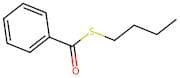
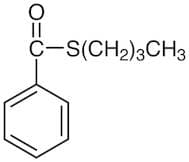
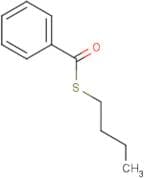
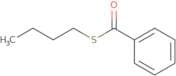
Thiobenzoic acid butyl ester, with the CAS number 7269-35-4, is an organic compound characterized by the presence of a thiol group (-SH) and an ester functional group. It is typically a colorless to pale yellow liquid with a distinctive odor. This compound is soluble in organic solvents and exhibits moderate stability under standard conditions. Its chemical structure consists of a butyl group attached to the thiobenzoic acid moiety, which contributes to its reactivity and potential applications in organic synthesis. Thiobenzoic acid derivatives are known for their utility in various chemical reactions, including nucleophilic substitutions and as intermediates in the synthesis of pharmaceuticals and agrochemicals. The "95%" designation indicates a high level of purity, making it suitable for laboratory and industrial applications. Safety precautions should be observed when handling this compound, as it may pose health risks if inhaled or ingested, and appropriate personal protective equipment should be used.
Formula:C11H14OS
InChI:InChI=1/C11H14OS/c1-2-3-9-13-11(12)10-7-5-4-6-8-10/h4-8H,2-3,9H2,1H3
SMILES:CCCCSC(=O)c1ccccc1
Synonyms:- Thiobenzoic acid S-n-butyl ester
- S-butyl benzenecarbothioate
Sort by
Purity (%)
0
100
|
0
|
50
|
90
|
95
|
100
Found 5 products.
S-Butyl Thiobenzoate
CAS:Formula:C11H14OSPurity:>97.0%(GC)Color and Shape:Colorless to Light orange to Yellow clear liquidMolecular weight:194.29S-Butyl Thiobenzoate
CAS:S-Butyl thiobenzoate is a cyclic, sulfur-containing solvent that is used in the production of pharmaceuticals and agrochemicals. It is also used to produce an intermediate for the synthesis of certain organic compounds. S-Butyl thiobenzoate undergoes decarboxylation at high temperatures to form butyric acid, which can be used as a feedstock for the production of fine chemicals or as a fuel additive. This chemical has shown biomolecular activity in synthetic reactions involving formamide and thiosulfate. In addition, S-Butyl thiobenzoate easily reacts with halides and other electrophiles to generate sulfoxides. This chemical has been shown to efficiently catalyze the conversion of sodium carbonate into sodium bicarbonate in an operational procedure.Formula:C11H14OSPurity:Min. 95%Molecular weight:194.29 g/mol