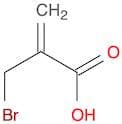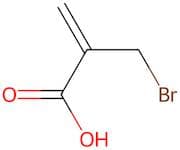
CAS 72707-66-5
:2-(Bromomethyl)acrylic acid
Description:
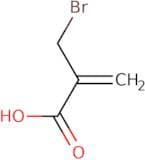
2-(Bromomethyl)acrylic acid is an organic compound characterized by the presence of both a bromomethyl group and a carboxylic acid functional group. Its molecular structure features a double bond between the first and second carbon atoms of the acrylic acid backbone, which contributes to its reactivity. The bromomethyl group, located at the second carbon, enhances the compound's electrophilic properties, making it useful in various chemical reactions, including nucleophilic substitutions and polymerizations. This compound is typically a colorless to pale yellow liquid and is soluble in organic solvents, while its carboxylic acid group imparts some degree of solubility in water. Due to its functional groups, 2-(Bromomethyl)acrylic acid can participate in a range of chemical transformations, making it valuable in organic synthesis and materials science. Safety precautions should be taken when handling this compound, as it may pose health risks due to its bromine content and acidic nature.
Formula:C4H5BrO2
InChI:InChI=1/C4H5BrO2/c1-3(2-5)4(6)7/h1-2H2,(H,6,7)
InChI key:InChIKey=NOOYFQLPKUQDNE-UHFFFAOYSA-N
SMILES:C(C(O)=O)(CBr)=C
Synonyms:- 2-(Bromomethyl)-2-propenoic acid
- 2-(Bromomethyl)Prop-2-Enoic Acid
- 2-(Bromomethyl)Propenoic Acid
- 2-Propenoic acid, 2-(bromomethyl)-
- Bromomethylacrylic acid
- α-(Bromomethyl)acrylic acid
- α-Bromomethacrylic acid
- 2-(Bromomethyl)acrylic acid
- 2-(bromomethyl)-2-propenoicaci
- ALPHA-BROMO METHYL ACRYLIC ACID
Sort by
Purity (%)
0
100
|
0
|
50
|
90
|
95
|
100
Found 6 products.
2-(Bromomethyl)acrylic acid
CAS:Formula:C4H5BrO2Purity:95%Color and Shape:SolidMolecular weight:164.98532-(Bromomethyl)acrylic Acid
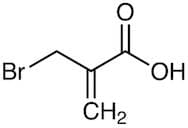
CAS:Formula:C4H5BrO2Purity:>98.0%(GC)(T)Color and Shape:White to Almost white powder to crystalMolecular weight:164.992-(Bromomethyl)acrylic acid
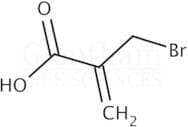
CAS:2-(Bromomethyl)acrylic acid is a monomer that has been synthesized from bromoacetic acid and acrylic acid. It is an efficient method for the synthesis of 2-bromoethyl acrylate, which can be used as a precursor for polyurethanes and other polymers. The 2-bromoethyl acrylate can be obtained through allylation with ethylene glycol, followed by hydrolysis to produce acrylic acid. This monomer reacts with free hydroxyl groups to form esters and ethers. It also reacts with nitrogen atoms to form amides or nitriles. Cell culture studies have shown that this compound has no toxic effects on human erythrocytes or hepatocytes.Formula:C4H5BrO2Purity:Min. 95%Color and Shape:PowderMolecular weight:164.99 g/mol