CAS 72778-00-8
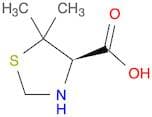
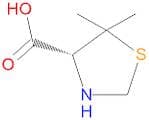
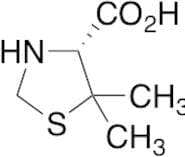
:L-5,5-dimethylthiazolidine-4-*carboxylic acid
Description:
L-5,5-dimethylthiazolidine-4-carboxylic acid, commonly referred to as DMTA, is an organic compound characterized by its thiazolidine ring structure, which incorporates a carboxylic acid functional group. This compound features two methyl groups attached to the 5-position of the thiazolidine ring, contributing to its unique steric and electronic properties. DMTA is known for its potential applications in various fields, including pharmaceuticals and biochemistry, particularly as a building block in the synthesis of bioactive molecules. The presence of the carboxylic acid group enhances its solubility in polar solvents and allows for potential interactions with biological systems. Additionally, DMTA may exhibit antioxidant properties, making it of interest in studies related to oxidative stress and cellular protection. Its stability and reactivity can be influenced by environmental conditions, such as pH and temperature, which are important considerations in its handling and application. Overall, L-5,5-dimethylthiazolidine-4-carboxylic acid is a compound of interest due to its structural features and potential biological activities.
Formula:C6H11NO2S
Synonyms:- (R)-5,5-DIMETHYL-1,3-THIAZOLIDINE-4-CARBOXYLIC ACID
- L-5,5-Dimethylthiazolidine-4-carboxyl
- L-5,5-DIMETHYLTHIAZOLIDINE-4-CARBOXYLIC ACID
- (R)-5,5-Dimethyl-4-thiazolidinecarboxylic Acid
- (R)-DTC-OH
Sort by
Purity (%)
0
100
|
0
|
50
|
90
|
95
|
100
Found 4 products.
L-5,5-Dimethylthiazolidine-4-carboxylic acid
CAS:Formula:C6H11NO2SPurity:98%Color and Shape:SolidMolecular weight:161.2220L-5,5-Dimethylthiazolidine-4-carboxylic acid
CAS:L-5,5-Dimethylthiazolidine-4-carboxylic acidFormula:C6H11NO2SPurity:98%Color and Shape: white solidMolecular weight:161.22g/mol(R)-5,5-Dimethylthiazolidine-4-carboxylic acid
CAS:Formula:C6H11NO2SPurity:98%Color and Shape:Solid, No data available.Molecular weight:161.22L-5,5-Dimethylthiazolidine-4-carboxylic Acid
CAS:Controlled ProductApplications Found to act on the cell membrane of tumour cells, possible causing a reverse transformation to normal cells through restoration of contact inhibition.
References Howard-Lock, H.E., et al.: Can. J. Chem., 64, 1215 (1986), McElroy, A.B., et al.: J. Med. Chem., 35, 2582 (1992)Formula:C6H11NO2SColor and Shape:NeatMolecular weight:161.22