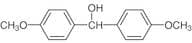
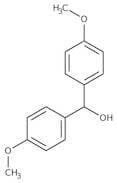
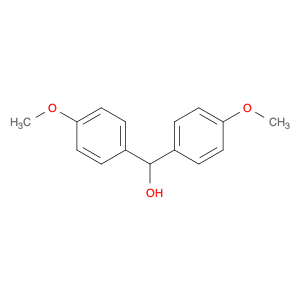
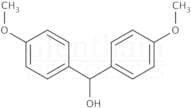
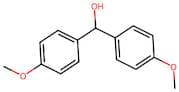
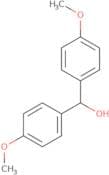
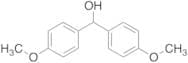
CAS 728-87-0
:4-Methoxy-α-(4-methoxyphenyl)benzenemethanol
- 4,4-Dimethoxydiphenylmethanol
- 4,4′-Dimethoxydiphenylcarbinol
- 4-Methoxy-4′-methoxybenzhydrol
- 4-Methoxy-Α-(4-Methoxyphenyl)Benzenemethanol
- Benzenemethanol, 4-methoxy-α-(4-methoxyphenyl)-
- Benzhydrol, 4,4′-dimethoxy-
- Bis(4-Methoxyphenyl)Methanol
- Bis(4-methoxyphenyl) carbinol
- Bis(p-methoxyphenyl)carbinol
- Bis(p-methoxyphenyl)methanol
- NSC 5256
- p,p′-Dimethoxybenzhydrol
- See more synonyms
4,4'-Dimethoxybenzhydrol
CAS:Formula:C15H16O3Purity:>98.0%(GC)Color and Shape:White to Almost white powder to crystalMolecular weight:244.294,4'-Dimethoxybenzhydrol, 98+%
CAS:4,4?-Dimethoxybenzhydrol was used to study the kinetics and mechanism of oxidation of substituted benzhydrols to corresponding benzophenones in the presence of Hg(OAc)2 by N-bromosuccinimide. It is useful in the protection of glutamine and asparagine residues in peptide synthesis, reagent for the N-Formula:C15H16O3Purity:98+%Color and Shape:White, PowderMolecular weight:244.294,4'-DIMETHOXYBENZHYDROL
CAS:Formula:C15H16O3Purity:98%Color and Shape:SolidMolecular weight:244.28574,4'-Dimethoxybenzhydrol
CAS:4,4'-Dimethoxybenzhydrol is a reaction system that has been used to control experiments in which the nucleophile is an iron catalyst. The reaction system was also used to determine the reactivity of various functional groups. The linear plot of the rate of reaction versus concentration of cyclopentenes, hydroxyl group, and dehydrated functionalities indicated that these factors had little effect on the rate of reaction. However, it was found that lactams and trifluorides were able to increase the rate of reaction. Anilines were also found to be effective as they reacted with hydrogen peroxide to form phenoxides.
Formula:C15H16O3Purity:Min. 95%Color and Shape:White PowderMolecular weight:244.29 g/mol4,4'-Dimethoxybenzhydrol
CAS:Controlled ProductApplications 4,4'-Dimethoxybenzhydrol acts as a reagent in the preparation of aryloxyacetamide derivatives and their biological activity as neuroprotective agents. Preparation and anticancer activity of quebecol and analogs.
References Zhong, Y., et al.: Bioorg. Med. Chem. Lett., 26, 2526 (2016); Pericherla, K., et al.: Bioorg. Med. Chem. Lett., 23, 5329 (2013)Formula:C15H16O3Color and Shape:NeatMolecular weight:244.29