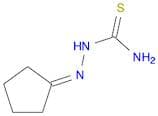
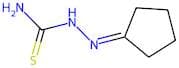
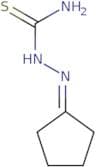
CAS 7283-39-8
:2-cyclopentylidenehydrazinecarbothioamide
Description:
2-Cyclopentylidenehydrazinecarbothioamide, with the CAS number 7283-39-8, is a chemical compound characterized by its unique structural features, including a cyclopentyl group and a hydrazinecarbothioamide functional group. This compound typically exhibits properties associated with thioamides, such as potential reactivity in nucleophilic substitution reactions and the ability to form hydrogen bonds due to the presence of the amide functional group. It may also display moderate solubility in organic solvents, influenced by the hydrophobic cyclopentyl ring. The presence of the hydrazine moiety suggests potential applications in organic synthesis, particularly in the formation of more complex molecules. Additionally, compounds of this nature can exhibit biological activity, making them of interest in medicinal chemistry. However, specific physical properties such as melting point, boiling point, and spectral data would require empirical measurement or literature reference for precise characterization. Overall, 2-cyclopentylidenehydrazinecarbothioamide represents a versatile compound with potential applications in various chemical and pharmaceutical contexts.
Formula:C6H11N3S
InChI:InChI=1/C6H11N3S/c7-6(10)9-8-5-3-1-2-4-5/h1-4H2,(H3,7,9,10)
SMILES:C1CCC(=NNC(=N)S)C1
Synonyms:- Hydrazinecarbothioamide, 2-Cyclopentylidene-
Sort by
Purity (%)
0
100
|
0
|
50
|
90
|
95
|
100
Found 4 products.
1-Cyclopentylidenethiosemicarbazide
CAS:Formula:C6H11N3SPurity:%Color and Shape:SolidMolecular weight:157.23662-Cyclopentylidenehydrazine-1-carbothioamide
CAS:2-Cyclopentylidenehydrazine-1-carbothioamidePurity:95%Molecular weight:157.24g/mol(Cyclopentylideneamino)thiourea
CAS:(Cyclopentylideneamino)thiourea is a chemical compound that is also known as CPT. CPT is a tautomer of the amino acid cysteine and has been shown to have anti-cancer properties in vitro. It chelates with ferric ions, forming a redox cycle that produces reactive oxygen species (ROS). This leads to lipid peroxidation and cell death. CPT has been shown to be effective against neurodegenerative diseases such as Alzheimer's disease, Parkinson's disease, and Huntington's disease. However, it does not work on cancer cells that are resistant to chemotherapy drugs such as 5-fluorouracil or cisplatin. The mechanism of action for these types of cancers is not yet fully understood.Formula:C6H11N3SPurity:Min. 95%Molecular weight:157.24 g/mol