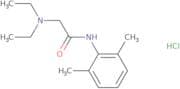
CAS 73-78-9
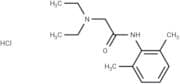
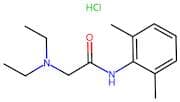
:Lidocaine hydrochloride
- 2',6'-Acetoxylidide, 2-(diethylamino)-, monohydrochloride
- 2-(Diethylamino)-2',6'-acetoxylidide hydrochloride
- 2-(Diethylamino)-2',6'-dimethylacetanilide hydrochloride
- 2-(Diethylamino)-2′,6′-acetoxylidide hydrochloride
- 2-(Diethylamino)-2′,6′-dimethylacetanilide hydrochloride
- 2-(Diethylamino)-N-(2,6-dimethylphenyl)acetamide hydrochloride
- 2-(Diethylamino)-N-(2,6-dimethylphenyl)acetamide monohydrochloride
- 2′,6′-Acetoxylidide, 2-(diethylamino)-, monohydrochloride
- Acetamide, 2-(diethylamino)-N-(2,6-dimethylphenyl)-, hydrochloride (1:1)
- Alphacaine
- DioCaine
- Irtopan
- Jetmonal
- Lidesthesin
- Lidocain hydrochloride
- Lidocaina, Clorhidrato
- Lidocaine Hydrochloride
- Lidocaine monohydrochloride
- Lidocaine, Chlorhydrate
- Lidocainhydrochlorid
- Lidothesin
- Lignavet
- Lignocaine hydrochloride
- Luan
- Metaclopromide hydrochloride
- Odontalg
- Proliferol
- Rapidocaine
- Sedagul
- Versicane
- Xilina hydrochloride
- Xycaine hydrochloride
- Xylanaest purum
- Xylocaine Astra
- Xylocaine hydrochloride
- Xylocard
- Xyloneural
- Xylotox
- See more synonyms
Lidocaine hydrochloride
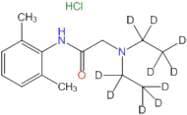
CAS:Lidocaine HCl: local anesthetic, antiarrhythmic, stronger & longer-lasting than procaine but shorter than bupivacaine/prilocaine.Formula:C14H23ClN2OPurity:99.81% - 99.92%Color and Shape:White Crystal PowderMolecular weight:270.798Lidocaine-d10 HCl(N,N-diethyl-d10)
CAS:Purity:99 atom % DColor and Shape:White SolidMolecular weight:280.86Lidocaine-d6 Hydrochloride
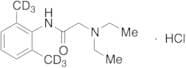
CAS:Controlled ProductApplications Lidocaine-d6 Hydrochloride is the labeled analogue of Lidocaine Hydrochloride, a local anesthetic; antiarrhythmic (class IB). Long-acting, membrane stabilizing agent against ventricular arrhythmia. Originally developed as a local anesthetic.
Not a dangerous good if item is equal to or less than 1g/ml and there is less than 100g/ml in the package
References Duce, R., et al.: J. Pharmacol. Exp. Ther., 179, 580 (1971), Kronberg, G.H., et al.: J. Med. Chem., 16, 739 (1973), Groningsson, K., et al.: Anal. Profiles Drug Subs., 14, 207 (1985), Davies, P.S., et al.: Drugs, 64, 937 (2004),Formula:C14H17D6ClN2OColor and Shape:NeatMolecular weight:276.84Lidocaine hydrochloride
CAS:Lidocaine is a local anesthetic that prevents nerve conduction by blocking sodium channels in the nerves. It is used for the treatment of pain, as well as for the induction and maintenance of general anesthesia. Lidocaine hydrochloride is chemically stable and can be administered intravenously, intramuscularly, or topically. It also has synergistic effects when used in combination with other drugs such as papaverine hydrochloride, atropine sulfate, ephedrine hydrochloride, or phenylephrine hydrochloride. Lidocaine may cause neuronal death when injected into the brain and has been shown to have cardiac effects when administered intravenously. The drug can interact with other drugs that alter its metabolism or energy production. Lidocaine also binds to toll-like receptors on cells in the nasal cavity, leading to an anti-inflammatory effect.
Formula:C14H23ClN2OPurity:Min. 95%Color and Shape:PowderMolecular weight:270.8 g/mol