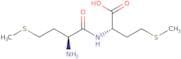
CAS 7349-78-2
:met-met
- H-Met-Met-OH
H-Met-Met-OH
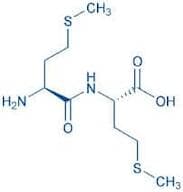
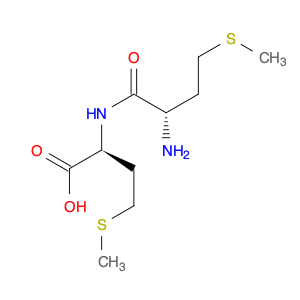
CAS:Yang et al. observed that methionyl-methionine promotes α-s1 casein synthesis in bovine mammary gland explants.Formula:C10H20N2O3S2Purity:> 99%Color and Shape:White PowderMolecular weight:280.41Met-Met
CAS:Met-Met is a dipeptide that is synthesized from the amino acids methionine and methyltetrahydrofolate. It is used in the synthesis of peptides and biochemicals, as well as in pharmacological treatments for diseases including bacterial infections. Met-Met has significant interactions with dopamine, catechol-o-methyltransferase, and energy metabolism. The enzyme catechol-o-methyltransferase catalyzes the conversion of dopamine to 3,4-dihydroxyphenylacetic acid (DOPAC), which may lead to a decrease in dopamine levels. Met-Met also inhibits the metabolism of catecholamines, leading to an increase in cellular levels of catecholamines such as dopamine and norepinephrine. This inhibition may be responsible for metabolic disorders such as obesity or low body mass index (BMI)
Formula:C10H20N2O3S2Purity:Min. 95%Molecular weight:280.41 g/molH-Met-Met-OH
CAS:H-Met-Met-OH is a dietary supplement that has been shown to have a variety of health benefits in animals. It has been shown to increase the production of tnf-α and other fatty acids, which are known to play a role in cellular physiology. H-Met-Met-OH also has the ability to inhibit protein synthesis and this is thought to be due to its transport properties as well as its reaction products. H-Met-Met-OH can be taken orally or given through explants, either orally or by injection.
Formula:C10H20N2O3S2Purity:Min. 95%Color and Shape:White PowderMolecular weight:280.41 g/mol