CAS 73537-92-5
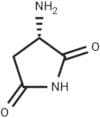
:2,5-Pyrrolidinedione, 3-amino-, (S)-
Description:
2,5-Pyrrolidinedione, 3-amino-, (S)-, also known as (S)-3-amino-2,5-pyrrolidinedione, is a chemical compound characterized by its pyrrolidine ring structure with a carbonyl group and an amino group. This compound is a chiral molecule, with the (S)- designation indicating its specific stereochemistry. It typically appears as a solid or crystalline substance and is soluble in polar solvents. The presence of the amino group suggests potential for hydrogen bonding, which can influence its reactivity and interactions with other molecules. This compound may be of interest in various fields, including medicinal chemistry and organic synthesis, due to its potential biological activity and utility as an intermediate in the synthesis of more complex molecules. Its CAS number, 73537-92-5, allows for easy identification in chemical databases and literature. As with many nitrogen-containing heterocycles, it may exhibit unique properties such as basicity and the ability to participate in various chemical reactions, including nucleophilic substitutions and cyclization processes.
Formula:C4H6N2O2
Synonyms:- 2,5-Pyrrolidinedione, 3-amino-, (3S)-
- (S)-Aspartimide
- (S)-3-Aminopyrrolidine-2,5-dione
Sort by
Purity (%)
0
100
|
0
|
50
|
90
|
95
|
100
Found 3 products.
(S)-3-Aminopyrrolidine-2,5-dione
CAS:(S)-3-Aminopyrrolidine-2,5-dione is a compound with potential anticonvulsant properties, and its derivatives exhibit significant in vivo efficacy.Formula:C4H6N2O2Color and Shape:SolidMolecular weight:114.1(S)-Aspartimide
CAS:(S)-Aspartimide is a drug product that is used in the synthesis of pharmaceuticals. Its purity should be greater than 99% and it should be free from detectable impurities. (S)-Aspartimide is metabolized by esterases, glutathione reductase, cytochrome P450 enzymes, and conjugation with glucuronic acid. It has been shown to inhibit the growth of bacteria that are resistant to penicillin, ampicillin, erythromycin, and gatifloxacin. (S)-Aspartimide has been found to have an anti-inflammatory effect due to its inhibition of prostaglandin synthesis.
Formula:C4H6N2O2Purity:Min. 95%Molecular weight:114.10 g/mol