CAS 736088-02-1
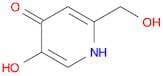
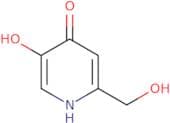
:5-hydroxy-2-(hydroxymethyl)pyridin-4(1H)-one
Description:
5-Hydroxy-2-(hydroxymethyl)pyridin-4(1H)-one, with the CAS number 736088-02-1, is a chemical compound characterized by its pyridine ring structure, which is a six-membered aromatic ring containing one nitrogen atom. This compound features two hydroxyl groups, one at the 5-position and another at the 2-position, contributing to its potential as a chelating agent and its biological activity. The presence of the hydroxymethyl group at the 2-position enhances its solubility and reactivity. It is often studied for its potential applications in medicinal chemistry, particularly in the development of pharmaceuticals due to its ability to interact with metal ions and biological systems. The compound may exhibit antioxidant properties and has been investigated for its role in various biochemical pathways. As with many pyridine derivatives, it is important to consider its stability, solubility in different solvents, and reactivity under various conditions when evaluating its practical applications in research and industry.
Formula:C6H7NO3
InChI:InChI=1/C6H7NO3/c8-3-4-1-5(9)6(10)2-7-4/h1-2,8,10H,3H2,(H,7,9)
SMILES:c1c(CO)[nH]cc(c1=O)O
Sort by
Purity (%)
0
100
|
0
|
50
|
90
|
95
|
100
Found 3 products.
6-(Hydroxymethyl)pyridine-3,4-diol
CAS:6-(Hydroxymethyl)pyridine-3,4-diol is a ligand that binds to the opioid receptor and is used as a tool for studying opioid receptors. The ligand has been shown to bind specifically to the mu-, delta-, and kappa-opioid receptors in rat brain membranes and is an agonist for these receptor types. 6-(Hydroxymethyl)pyridine-3,4-diol has also been shown to be an antagonist for the nociceptin receptor. This compound has been analyzed using quantum chemistry tools to determine its electronic structure and geometry. The energies of these molecules have been calculated using quantum chemistry calculations. Geometric parameters were optimized by minimizing the energy of the molecule using molecular mechanics calculations. Parameters such as solvation, complex formation, and chelate constants have also been determined with quantum chemistry calculations. The binding constants are then analyzed with quantum chemistry methods to optimize the parameters of structures in order to find those structures withFormula:C6H7NO3Purity:Min. 95%Molecular weight:141.12 g/mol