CAS 73692-50-9
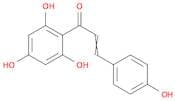
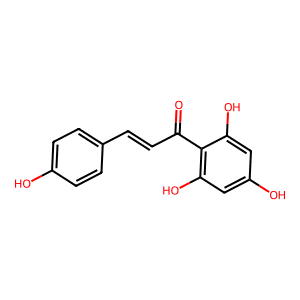
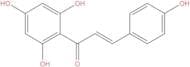
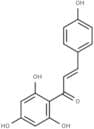
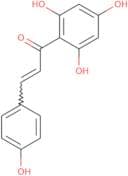
:2′,4,4′,6′-Tetrahydroxychalcone
Description:
2′,4,4′,6′-Tetrahydroxychalcone is a flavonoid compound characterized by its chalcone structure, which consists of two aromatic rings connected by a three-carbon α,β-unsaturated carbonyl system. This specific compound features four hydroxyl (-OH) groups located at the 2′, 4, 4′, and 6′ positions of the aromatic rings, contributing to its potential antioxidant properties. It is typically a yellow crystalline solid, soluble in organic solvents, and exhibits moderate solubility in water due to the presence of multiple hydroxyl groups. The compound is of interest in various fields, including pharmacology and food science, due to its potential health benefits, such as anti-inflammatory and antimicrobial activities. Additionally, its structural characteristics allow it to participate in various chemical reactions, making it a valuable compound for synthetic organic chemistry. As with many flavonoids, its biological activities may be influenced by its structural configuration, making it a subject of ongoing research in natural product chemistry.
Formula:C15H12O5
InChI:InChI=1S/C15H12O5/c16-10-4-1-9(2-5-10)3-6-12(18)15-13(19)7-11(17)8-14(15)20/h1-8,16-17,19-20H
InChI key:InChIKey=YQHMWTPYORBCMF-UHFFFAOYSA-N
SMILES:C(C=CC1=CC=C(O)C=C1)(=O)C2=C(O)C=C(O)C=C2O
Synonyms:- 2-Propen-1-one, 3-(4-hydroxyphenyl)-1-(2,4,6-trihydroxyphenyl)-
- 2′,4,4′,6′-Tetrahydroxychalcone
- 3-(4-Hydroxyphenyl)-1-(2,4,6-trihydroxyphenyl)-2-propen-1-one
- 4,2′,4′,6′-Tetrahydroxychalcone
- Chalcone, 2′,4,4′,6′-tetrahydroxy-
Sort by
Purity (%)
0
100
|
0
|
50
|
90
|
95
|
100
Found 7 products.
(E)-Naringenin chalcone
CAS:2′,4,4′,6′-Tetrahydroxychalcone (Isosalipurpol) has antiallergic activity, and suppresses asthmatic symptoms by inhibiting Th2 cytokine from CD4 T cells.Formula:C15H12O5Purity:97.82% - 98.74%Color and Shape:SolidMolecular weight:272.25Naringenin chalcone (cis and trans mix)
CAS:Naringenin chalcone (cis and trans mix) is a phytochemical compound, which is a naturally occurring flavonoid found in citrus fruits. It is extracted from the peels and seeds of these fruits, which are known for their high flavonoid content. This compound exhibits a variety of biological activities due to its structural characteristics that allow for interaction with diverse biochemical pathways.Formula:C15H12O5Purity:Min. 95%Molecular weight:272.25 g/mol