CAS 73870-24-3
:4-(bromomethyl)pyridine hydrobromide
Description:
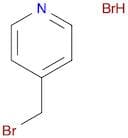
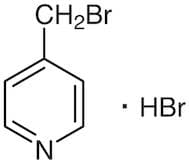
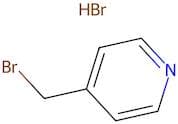
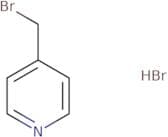
4-(Bromomethyl)pyridine hydrobromide is a chemical compound characterized by its pyridine ring substituted with a bromomethyl group. This compound typically appears as a white to off-white solid and is soluble in water and various organic solvents, which is indicative of its ionic nature due to the presence of the hydrobromide salt. The bromomethyl group enhances its reactivity, making it useful in various organic synthesis applications, particularly in the formation of carbon-carbon bonds and as a building block in the synthesis of more complex molecules. The presence of the pyridine moiety contributes to its basicity and potential as a ligand in coordination chemistry. Safety precautions should be taken when handling this compound, as it may pose health risks due to its bromine content and potential reactivity. Overall, 4-(bromomethyl)pyridine hydrobromide is a versatile intermediate in chemical synthesis, particularly in the development of pharmaceuticals and agrochemicals.
Formula:C6H7Br2N
InChI:InChI=1/C6H6BrN.BrH/c7-5-6-1-3-8-4-2-6;/h1-4H,5H2;1H
SMILES:c1cnccc1CBr.Br
Synonyms:- 4-(Bromomethyl)Pyridine Hydrobromide (1:1)
- 4-(Bromomethyl)pyridine,hydrobromide
Sort by
Purity (%)
0
100
|
0
|
50
|
90
|
95
|
100
Found 5 products.
4-(Bromomethyl)pyridine hydrobromide
CAS:Formula:C6H7Br2NPurity:97%Color and Shape:SolidMolecular weight:252.93454-(Bromomethyl)pyridine Hydrobromide
CAS:Formula:C6H6BrN·HBrPurity:>97.0%(T)Color and Shape:White to Light yellow powder to crystalMolecular weight:252.944-(Bromomethyl)pyridine hydrobromide
CAS:4-(Bromomethyl)pyridine hydrobromidePurity:97%Molecular weight:252.93g/mol4-(Bromomethyl)pyridine hydrobromide
CAS:4-Bromomethylpyridine hydrobromide is a carboxylate that has the molecular formula C5H6BrN. It has been shown to be a potent inhibitor of Leishmania, the protozoan parasite that causes leishmaniasis. The molecular structure of 4-bromomethylpyridine hydrobromide may be derived from pyridinium or phosphate groups. This molecule has been synthesized using electrochemical methods in which the oxidation catalyst is protonated on a platinum electrode and reacts with methylpyridine to form 4-bromomethylpyridine. This synthetic pathway also produces nucleobases such as thymine, cytosine, and uracil, which are used for DNA synthesis and repair.
Formula:C6H6BrN•HBrPurity:(%) Min. 85%Color and Shape:PowderMolecular weight:252.93 g/mol4-(Bromomethyl)pyridine hydrobromide
CAS:Formula:C6H7Br2NPurity:97%Color and Shape:SolidMolecular weight:252.937