CAS 7393-43-3
:Tetraallyltin
Description:
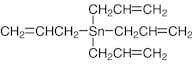
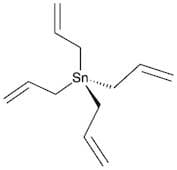
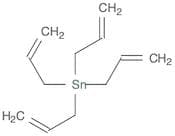
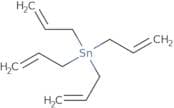
Tetraallyltin is an organotin compound characterized by its four allyl groups (C3H5) bonded to a tin atom. It is typically a colorless to pale yellow liquid with a distinctive odor. This compound is known for its reactivity, particularly in polymer chemistry, where it can act as a catalyst or a stabilizer. Tetraallyltin exhibits low solubility in water but is soluble in organic solvents, making it useful in various chemical applications. It has a relatively low boiling point and can decompose upon heating, releasing toxic tin oxides. Due to the presence of tin, it can also exhibit antimicrobial properties. However, safety precautions are necessary when handling tetraallyltin, as organotin compounds can be toxic and pose environmental hazards. Proper storage and disposal methods are essential to mitigate risks associated with its use. Overall, tetraallyltin is a versatile compound with applications in materials science and organic synthesis, but it requires careful handling due to its potential health and environmental impacts.
Formula:C12H20Sn
InChI:InChI=1S/4C3H5.Sn/c4*1-3-2;/h4*3H,1-2H2;
InChI key:InChIKey=XJPKDRJZNZMJQM-UHFFFAOYSA-N
SMILES:[Sn](CC=C)(CC=C)(CC=C)CC=C
Synonyms:- Ai3-28455
- Stannane, tetra-2-propen-1-yl-
- Stannane, tetra-2-propenyl-
- Stannane, tetraallyl-
- Tetra(2-propenyl)stannane
- Tetra-2-propen-1-ylstannane
- Tetraallylstannane
- Tetrakis(2-propenyl)stannane
- Tetrallylstannane
- Tetraprop-2-En-1-Ylstannane
- Tin, tetraallyl-
Sort by
Purity (%)
0
100
|
0
|
50
|
90
|
95
|
100
Found 4 products.
Tetraallyltin
CAS:Formula:C12H20SnPurity:>97.0%(GC)Color and Shape:Colorless to Light yellow clear liquidMolecular weight:283.00Tetraallyltin, min. 95%
CAS:Tetraallyltin, min. 95%
Formula:Sn(CH2CHCH2)4Purity:min. 95%Color and Shape:light yellow liq.Molecular weight:282.98Tetraallyltin
CAS:Tetraallyltin is an aliphatic hydrocarbon that is a β-unsaturated ketone. It has been shown to have antimicrobial properties and is being studied for its possible use in treating insulin resistance. Tetraallyltin has been shown to inhibit the growth of bacteria by binding to reactive sites on the bacterial cell wall and preventing the formation of an antibiotic-inhibitor complex with enzymes that are required for cell wall biosynthesis, inhibiting protein synthesis and cell division. Tetraallyltin also inhibits the growth of fungus by binding to hydroxyl groups in their cell walls, which prevents them from forming new cells. Tetraallyltin can be synthesized using a palladium-catalyzed allylation reaction between allyl chloride and tetrachlorohydroquinone in trifluoroacetic acid (TFA) as a solvent at room temperature. The first step involves the addition of chlorine gas to TFA, whichFormula:C12H20SnPurity:Min. 95%Color and Shape:Clear LiquidMolecular weight:283 g/mol