CAS 742103-27-1
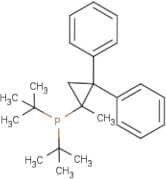
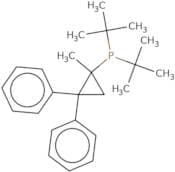
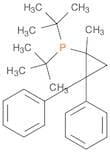
:Phosphine,bis(1,1-dimethylethyl)(1-methyl-2,2-diphenylcyclopropyl)-
Description:
Phosphine, bis(1,1-dimethylethyl)(1-methyl-2,2-diphenylcyclopropyl)-, identified by CAS number 742103-27-1, is an organophosphorus compound characterized by its unique molecular structure, which includes a phosphine group bonded to bulky organic substituents. This compound typically exhibits properties associated with phosphines, such as being a colorless gas or liquid at room temperature, with a distinctive odor reminiscent of garlic or fish. Its bulky substituents contribute to its steric hindrance, which can influence its reactivity and stability. Phosphines are known for their ability to act as ligands in coordination chemistry, and this particular compound may exhibit interesting electronic properties due to the presence of the diphenylcyclopropyl group. Additionally, the compound's solubility in organic solvents and potential applications in organic synthesis or catalysis may be of interest. However, specific safety and handling guidelines should be followed, as phosphines can be toxic and flammable. Always refer to material safety data sheets (MSDS) for detailed information on handling and hazards.
Formula:C24H33P
Synonyms:- Di-t-butyl(2,2-diphenyl-1-methylcyclopropyl)phosphinecBRIDP
- Mo-Phos
- ®
- cBRIDP
- cBRIDP[R]
- Di-t-butyl(2,2-diphenyl-1-methyl-1-cyclopropyl)phosphine
- cBRIDP(regR)
- Phosphine,bis(1,1-dimethylethyl)(1-methyl-2,2-diphenylcyclopropyl)-
Sort by
Purity (%)
0
100
|
0
|
50
|
90
|
95
|
100
Found 3 products.
Di-tert-butyl(1-methyl-2,2-diphenylcyclopropyl)phosphine
CAS:Di-tert-butyl(1-methyl-2,2-diphenylcyclopropyl)phosphineFormula:C24H33PPurity:95%Color and Shape: pale yellow solidMolecular weight:352.49g/molcBRIDP
CAS:The cBRIDP is an efficient method for the synthesis of propargylamines. It involves a cross-coupling reaction between aryl chlorides and magnesium, which can be carried out in situ. The cBRIDP is more environmentally friendly than traditional methods because it does not require the use of N-methylmorpholine N-oxide (NMMO), which is toxic and carcinogenic. Aryl chlorides are used as starting materials in this method, and these are easily available from many sources. The cBRIDP has been shown to have high yields and is selective for aromatic hydrocarbons. This process also produces light emission during reductive elimination, making it desirable for chemiluminescent applications such as agrochemical detection or medical imaging.Formula:C24H33PPurity:Min. 95 Area-%Color and Shape:PowderMolecular weight:352.5 g/molPhosphine,bis(1,1-dimethylethyl)(1-methyl-2,2-diphenylcyclopropyl)-
CAS:Formula:C24H33PPurity:95%;RGColor and Shape:SolidMolecular weight:352.4926