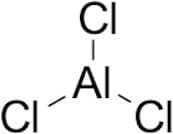
CAS 7446-70-0
:Aluminum chloride
Description:
Aluminum chloride, with the CAS number 7446-70-0, is an inorganic compound composed of aluminum and chlorine. It typically appears as a white or yellowish solid, and it is highly hygroscopic, meaning it readily absorbs moisture from the air. This compound is known for its ability to form complexes and is often used as a Lewis acid in various chemical reactions, particularly in organic synthesis and catalysis. Aluminum chloride can exist in several forms, including anhydrous and hydrated states, with the anhydrous form being more reactive. It has a high melting point and is soluble in polar solvents, such as water and alcohols, but insoluble in nonpolar solvents. In addition to its industrial applications, such as in the production of aluminum metal and in the manufacture of certain dyes and pharmaceuticals, aluminum chloride is also utilized in water treatment processes and as an antiperspirant in personal care products. However, it should be handled with care due to its potential irritant properties.
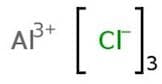
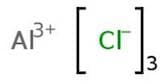
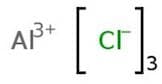
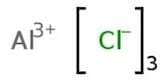
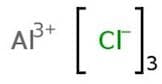
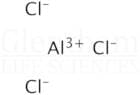
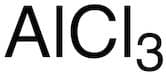
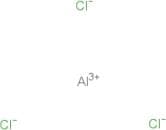
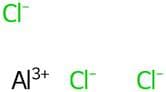
Formula:AlCl3
InChI:InChI=1/Al.3ClH.3H/h;3*1H;;;/p-3/rAlH3.3ClH/h1H3;3*1H/p-3
InChI key:InChIKey=VSCWAEJMTAWNJL-UHFFFAOYSA-K
SMILES:[Al](Cl)(Cl)Cl
Synonyms:- Aluminium Chloride Hexahydrate
- Aluminium chloride
- Aluminium chloride (AlCl3)
- Aluminium chloride anhydrous
- Aluminium trichloride
- Aluminiumchlorid
- Aluminum Chloride (s)
- Aluminum chloride (AlCl3)
- Aluminum chloride (AlCl<sub>3</sub>)
- Aluminum chloride,anhydrous
- Aluminum standard concentrate 10.00 g Al
- Aluminum trichloride
- Aluminum trichloride anhydrous
- Aluminum(III) chloride
- Anhydrous aluminum chloride
- Chlorure d'aluminium
- Cloruro De Aluminio
- Hemogin L
- Hemostop
- Lutan FN
- Nsc 143015
- Nsc 143016
- TK Flock
- Takibine 100
- Trichloroaluminum
- Trichloroaluminum Hexahydrate
- Aluminum chloride
- Aluminum chloride
- ALUMINIUM CHLORIDE (III)
- alluminio(clorurodi)
- ALUMINUM ATOMIC SPECTROSCOPY STANDARD
- AlCl3
- aluminiumchloride(anhydrous)
- ALUMINIUM(+3)CHLORIDE
- Aluminium, (chlorure d')
- ALUMINIUM(III) CHLORIDE
- Alluminio(cloruro di)
- Aluminiumchloride,anhydrous
- ALUMINUM AA STANDARD CONCENTRATE
- Aluminum chloride (1:3)
- aluminiumchloridesolutions
- See more synonyms
Sort by
Purity (%)
0
100
|
0
|
50
|
90
|
95
|
100
Found 20 products.
Aluminum chloride, ultra dry, 99.99% (metals basis)
CAS:Aluminum chloride is used to control excessive sweating. It is commonly used as a catalyst for the halogenation (especially chlorination) of aromatic groups, as well as in the Friedel Crafts reaction. It is also used in the Meerwein-Ponndorf-Verley reduction. It is widely used in the manufacturingFormula:AlCl3Purity:99.99%Color and Shape:Powder, WhiteMolecular weight:133.33Aluminum chloride, anhydrous, 99.999% (metals basis)
CAS:It is used to control excessive sweating. It is commonly used as a catalyst for the halogenation (especially chlorination) of aromatic groups, as well as in the Friedel Crafts reaction. It is also used in the Meerwein-Ponndorf-Verley reduction. It is widely used in the manufacturing of petrochemicalFormula:AlCl3Purity:99.999%Color and Shape:White, CrystallineMolecular weight:133.33Aluminum chloride, ultra dry, 99.999% (metals basis)
CAS:Aluminum chloride is used to control excessive sweating. It is commonly used as a catalyst for the halogenation (especially chlorination) of aromatic groups, as well as in the Friedel Crafts reaction. It is also used in the Meerwein-Ponndorf-Verley reduction. It is widely used in the manufacturing oFormula:AlCl3Purity:99.999%Color and Shape:Powder, WhiteMolecular weight:133.33Aluminum chloride, anhydrous, 95+%
CAS:It is used to control excessive sweating. It is commonly used as a catalyst for the halogenation (especially chlorination) of aromatic groups, as well as in the Friedel Crafts reaction. It is also used in the Meerwein-Ponndorf-Verley reduction. It is widely used in the manufacturing of petrochemicalFormula:AlCl3Purity:95+%Molecular weight:133.33Aluminum chloride, anhydrous, Reagent Grade
CAS:It is used as a catalyst for Friedel-Crafts acylation and alkylation of aromatic compounds. It is one of the most commonly employed Lewis acids for a wide variety of organic transformations. It catalyzes the ene reaction, polymerization, and isomerization reactions. For example, it can be used tFormula:AlCl3Color and Shape:Powder, White to pale yellowMolecular weight:133.33Aluminum chloride, 98+%, extra pure, anhydrous powder
CAS:Aluminum chloride is used to control excessive sweating. It is commonly used as a catalyst for the halogenation (especially chlorination) of aromatic groups, as well as in the Friedel Crafts reaction. It is also used in the Meerwein-Ponndorf-Verley reduction. It is widely used in the manufacturing oFormula:AlCl3Purity:98+%Color and Shape:White to yellow to grey, PowderMolecular weight:133.33Aluminum chloride, anhydrous, 99.985% (metals basis)
CAS:Lithium sulfate, anhydrous is used to treat bipolar disorder, solar panels and the potential for a new class of battery, and used as a catalyst for the elimination reaction.This Thermo Scientific Chemicals brand product was originally part of the Alfa Aesar product portfolio. Some documentation andFormula:AlCl3Purity:99.985%Color and Shape:White, PowderMolecular weight:133.33Aluminum chloride, anhydrous, granular, 99%
CAS:Aluminum chloride is used as a catalyst for Friedel-Crafts acylation and alkylation of aromatic compounds. It is one of the most commonly employed Lewis acids for a wide variety of organic transformations. It catalyzes the ene reaction, polymerization and isomerization reactions. For example, it canFormula:AlCl3Purity:99%Color and Shape:granular solid, Pale yellow to yellow-greyMolecular weight:133.33Aluminum chloride, anhydrous, reagent, 99%
CAS:Aluminum chloride, anhydrous, reagent, 99%
Formula:AlCl3Purity:99%Color and Shape:white to yellow pwdr.Molecular weight:133.34Aluminium chloride, anhydrous, powder, 99%
CAS:Formula:AlCl3Purity:≥ 99.0%Color and Shape:Off-white, pale yellow to yellow grey powderMolecular weight:133.34Aluminium chloride, anhydrous, granular, 98%
CAS:Formula:AlCl3Purity:≥ 98.5%Color and Shape:White, grey or yellow crystalline granulesMolecular weight:133.34Aluminium chloride, Anhydrous
CAS:Formula:AlCl3Purity:99.0%Color and Shape:SolidMolecular weight:133.33Aluminum(III) Chloride
CAS:Formula:AlCl3Purity:>98.0%(T)Color and Shape:White to Yellow to Orange powder to crystalMolecular weight:133.33Aluminium(III) chloride, anhydrous 99%
CAS:Aluminium(III) chloride, anhydrous 99%Formula:Al·3ClPurity:≥95%Color and Shape: slightly yellow to light grey solidMolecular weight:133.34053g/molAluminium(III) chloride, anhydrous
CAS:Aluminium(III) chloride, anhydrousPurity:99.99%Color and Shape:Pale Yellow SolidMolecular weight:133.34g/molAluminium chloride, anhydrous, 99.9+%
CAS:Formula:AlCl3Purity:≥ 99.9%Color and Shape:White crystalline powderMolecular weight:133.34Aluminum Chloride
CAS:Stability Moisture Sensitive
Applications Aluminum Trichloride is a powerful chemical reagent used as a catalyst in Freidel Crafts reactions, alkylations and acylations.
Not a dangerous good if item is equal to or less than 1g/ml and there is less than 100g/ml in the package
References Groggins. P. et al.: Ind. Eng. Chem., 23, 152 (1931); Brown, H. et al.L J. Am. Chem. Soc., 80, 2291 (1958);Formula:AlCl3Color and Shape:Off-White To Light YellowMolecular weight:133.34Aluminum chloride, anhydrous (99.99+%-Al) PURATREM
CAS:Aluminum chloride, anhydrous (99.99+%-Al) PURATREM
Formula:AlCl3Purity:(99.99+%-Al)Color and Shape:-20 mesh white to yellow pwdr.Molecular weight:133.34Aluminium chloride
CAS:Please enquire for more information about Aluminium chloride including the price, delivery time and more detailed product information at the technical inquiry form on this page
Formula:AlCl3Purity:Min. 95%Molecular weight:133.34 g/molRef: 3D-FA31682
Discontinued product