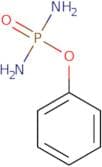
CAS 7450-69-3
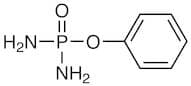
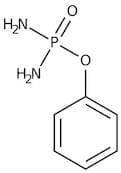
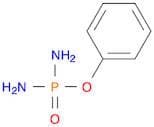
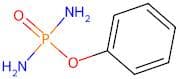
:Phenyl phosphorodiamidate
- Ai3-51284
- Diamidophosphoric acid phenyl ester
- Phenyl Phosphorodiamidate
- Phenyl phosphate diamide
- Phenylphosphorodiamidate
- Phosphoric acid phenyl ester diamide
- Phosphoric phenyl ester diamide
- Phosphorodiamidic acid, phenyl ester
- [(Diaminophosphoryl)oxy]benzene
- Phenyl diamidophosphate
Phenyl Phosphorodiamidate
CAS:Formula:C6H9N2O2PPurity:>95.0%(T)(HPLC)Color and Shape:White to Light yellow powder to crystalMolecular weight:172.12Phenyl phosphorodiamidate, 97%
CAS:Reagent for conversion of tautomeric keto-hydroxy groups (e.g. in N-heterocycles) directly to amino groups. This Thermo Scientific Chemicals brand product was originally part of the Alfa Aesar product portfolio. Some documentation and label information may refer to the legacy brand. The original AlfFormula:C6H9N2O2PPurity:97%Color and Shape:White to pale cream, Crystals or powder or crystalline powderMolecular weight:172.12Phenylphosphorodiamidate
CAS:Formula:C6H9N2O2PPurity:97%Color and Shape:SolidMolecular weight:172.1216Phenylphosphorodiamidate
CAS:PhenylphosphorodiamidatePurity:97%Color and Shape:White SolidMolecular weight:172.12162g/molDiaminophosphoryloxybenzene
CAS:Diaminophosphoryloxybenzene (DAPOB) is a chemical that can be used to measure the uptake of creatine kinase in human serum. It has been shown to form a complex with the enzyme, which is then transported into cells. The uptake of creatine kinase in the cells can be measured by measuring the amount of DAPOB that is released from the inside of the cells and into the surrounding medium. In order to use this technique, a collagen gel needs to be prepared and placed around the sample containing DAPOB. The kinetic properties of DAPOB are determined by observing how quickly it reacts with other chemicals in solution. DAPOB also forms intramolecular hydrogen bonds with itself, which may affect its ability to react with other compounds. X-ray crystal structures have revealed that DAPOB binds to protein synthesis enzymes such as polymerase chain reaction (PCR). These interactions are thought to be important for understanding how DAPOB affects protein
Formula:C6H9N2O2PPurity:Min. 95%Color and Shape:PowderMolecular weight:172.12 g/mol