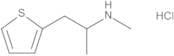
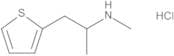
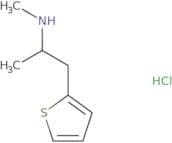
CAS 7464-94-0
:N,α-Dimethyl-2-thiopheneethanamine hydrochloride (1:1)
- N,α-Dimethyl-2-thiopheneethanamine hydrochloride (1:1)
- 2-Thiopheneethanamine, N,α-dimethyl-, hydrochloride (1:1)
- NSC 400137
- 2-Thiopheneethylamine, N,α-dimethyl-, hydrochloride
1-(Thiophen-2-yl)-2-methylaminopropane Hydrochloride (Methiopropamine Hydrochloride; MPA HCl)
CAS:Controlled ProductColor and Shape:Neat1-(Thiophen-2-yl)-2-methylaminopropane Hydrochloride (Methiopropamine Hydrochloride; MPA HCl) 1.0 mg/ml in Methanol (as free base)
CAS:Controlled ProductColor and Shape:Single Solutiond,l-Methiopropamine.HCl, 1mg/ml in Methanol (as free base)
CAS:Controlled ProductColor and Shape:Single SolutionMethiopropamine Hydrochloride
CAS:Controlled ProductApplications Methiopropamine is a thiophene-based structural analog of Methamphetamine (M258795). Reported side effects are quite adverse on higher doses including: increased heart rate, increased sweating, discolouration of extremeties, cardiovascular problems and chest pain. A CNS stimulant.
References Braun, U., et al.: J. Med. Chem., 20, 1543 (1977),Formula:C8H13NS·ClHColor and Shape:NeatMolecular weight:191.721N,alpha-Dimethyl-2-thiopheneethanamine hydrochloride
CAS:Controlled ProductMethiopropamine is a synthetic psychoactive substance that has been associated with long-term health effects. It is used recreationally for its stimulant properties, such as increased alertness and wakefulness. Methiopropamine may cause paranoia and delusions, as well as other long-term effects. The drug can be detected in the urine for up to five days after ingestion. Methiopropamine is an amphetamine analogue of cathinone, which is a naturally occurring substance found in the khat plant. It is classified by the DEA as a Schedule I controlled substance in the United States.
Formula:C8H14ClNSPurity:Min. 95%Molecular weight:191.72 g/mol