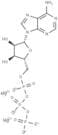
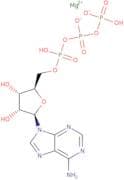
CAS 74804-12-9
:adenosine 5'-triphosphate magnesium*from equine M
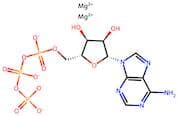
Adenosine 5'-triphosphate dimagnesium salt
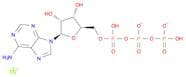
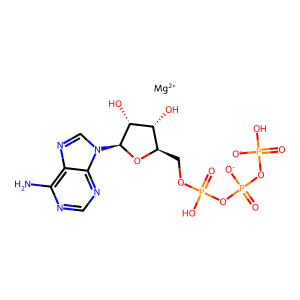
CAS:Formula:C10H12Mg2N5O13P3Purity:95%Color and Shape:SolidMolecular weight:551.7593Magnesium ((2R,3S,4R,5R)-5-(6-Amino-9H-Purin-9-Yl)-3,4-Dihydroxytetrahydrofuran-2-Yl)Methyl Triphosphate
CAS:Magnesium ((2R,3S,4R,5R)-5-(6-Amino-9H-Purin-9-Yl)-3,4-Dihydroxytetrahydrofuran-2-Yl)Methyl TriphosphatePurity:95%Molecular weight:551.76g/molAdenosine 5''-triphosphate magnesium salt
CAS:Formula:C10H16N5O13P3·xMg2Purity:≥ 95.0%Color and Shape:White powderMolecular weight:507.18 (free acid)ATP dimagnesium
CAS:ATP dimagnesium is an important substance for energy storage and metabolism in the body, and is involved in the energy cycle and metabolism of the body.Formula:C10H12Mg2N5O13P3Purity:99.19%Color and Shape:SolidMolecular weight:551.76Adenosine 5'-triphosphate magnesium salt
CAS:Adenosine-5'-triphosphate (ATP) is a nucleotide found in all living cells. It is used as a coenzyme for adenosine kinase, adenosine phosphokinase, and adenosine deaminase. ATP also acts as an important signaling molecule and has been shown to be involved in the regulation of cell metabolism, muscle contraction, and other cellular processes. The human body normally produces enough ATP to meet its needs through aerobic metabolism of glucose or fatty acids, but under certain conditions such as intense muscular activity or insufficient oxygen, more ATP must be produced by anaerobic metabolism. In these situations the mitochondria use glycolysis to produce lactic acid which is then converted into pyruvic acid by the enzyme lactate dehydrogenase. Pyruvic acid is then oxidized by the enzyme pyruvate dehydrogenase complex to produce acetyl-CoA which is further oxidized by the enzyme complex called Krebs
Formula:C10H18N5O13P3•xMgPurity:Min. 95 Area-%Color and Shape:White Off-White PowderMolecular weight:509.20 g/molAdenosine 5-triphosphate Magnesium Salt
CAS:Formula:C10H16N5O13P3Mg2Molecular weight:507.18 : 2(24.31)