CAS 7483-33-2
:quinoxaline-2-carbonitrile
Description:
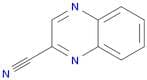
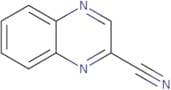
Quinoxaline-2-carbonitrile is an organic compound characterized by its bicyclic structure, which consists of a quinoxaline moiety and a cyano group attached to the second carbon of the quinoxaline ring. This compound typically appears as a solid and is known for its pale yellow to light brown color. Quinoxaline derivatives, including quinoxaline-2-carbonitrile, are of interest in various fields, including medicinal chemistry and materials science, due to their potential biological activities and applications in the synthesis of pharmaceuticals. The presence of the cyano group enhances its reactivity, making it a useful intermediate in organic synthesis. Quinoxaline-2-carbonitrile is generally soluble in polar organic solvents, and its properties can vary based on the specific conditions of use, such as temperature and solvent choice. Additionally, it may exhibit fluorescence, which can be advantageous in certain analytical applications. As with many chemical substances, proper handling and safety precautions are essential due to potential toxicity and reactivity.
Formula:C9H5N3
InChI:InChI=1/C9H5N3/c10-5-7-6-11-8-3-1-2-4-9(8)12-7/h1-4,6H
SMILES:c1ccc2c(c1)ncc(C#N)n2
Synonyms:- 2-Quinoxalinecarbonitrile
Sort by
Purity (%)
0
100
|
0
|
50
|
90
|
95
|
100
Found 3 products.
Quinoxaline-2-carbonitrile
CAS:Quinoxaline-2-carbonitrile is a quinoxaline that has been shown to be a specific agent for the treatment of cancer and other solid tumours. The hypoxic tumor has been shown to be a cellular target for this drug, which inhibits the synthesis of DNA and RNA. Quinoxaline-2-carbonitrile also inhibits cancer cell growth in culture by binding to the chlorine atom on the quinone ring. This binding prevents electron transfer from the quinone ring to an electron acceptor molecule, such as oxygen or NADPH, leading to inhibition of cellular respiration.
Formula:C9H5N3Purity:(Hplc-Ms) Min. 95 Area-%Color and Shape:PowderMolecular weight:155.16 g/molRef: 3D-FQ40687
Discontinued product