CAS 7493-90-5
:Threitol
Description:
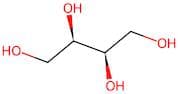
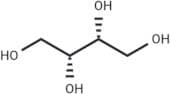
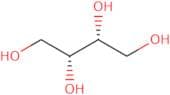
Threitol, with the CAS number 7493-90-5, is a four-carbon sugar alcohol, specifically a type of alditol derived from the sugar D-threose. It is a colorless, odorless, and hygroscopic compound that is soluble in water and exhibits a sweet taste. Threitol is a stereoisomer of erythritol, differing in the arrangement of hydroxyl groups around the carbon backbone. This compound is often used in biochemical research and applications, particularly in the study of metabolic pathways and as a potential stabilizer for proteins and enzymes due to its ability to form hydrogen bonds. Threitol can also serve as a reducing agent in various chemical reactions. Its low toxicity and biocompatibility make it suitable for use in food and pharmaceutical industries. Additionally, it plays a role in the synthesis of other organic compounds and can be found in certain biological systems, contributing to cellular processes. Overall, Threitol is a versatile compound with applications across multiple scientific fields.
Formula:C4H10O4
InChI:InChI=1/C4H10O4/c5-1-3(7)4(8)2-6/h3-8H,1-2H2/t3-,4-/s2
InChI key:InChIKey=UNXHWFMMPAWVPI-SEFKMRKONA-N
SMILES:[C@H]([C@@H](CO)O)(CO)O
Synonyms:- (?à)-Threitol
- (±)-Threitol
- 1,2,3,4-Butanetetrol,(R*,R*)-
- <span class="text-smallcaps">D</smallcap><smallcap>L</span>-Tetritol
- <span class="text-smallcaps">DL</span>-Threitol
- DL-Tetritol
- DL-Threitol
- Nsc 20660
- Threit
- Threitol (6CI,7CI,8CI)
- rel-(2R,3R)-1,2,3,4-Butanetetrol
- See more synonyms
Sort by
Purity (%)
0
100
|
0
|
50
|
90
|
95
|
100
Found 4 products.
DL-Threitol
CAS:D-threitol is the D-enantiomer of threitol. It has a role as a human metabolite. It is an enantiomer of a L-threitol.Formula:C4H10O4Purity:99.97%Color and Shape:SolidMolecular weight:122.12DL-Threitol
CAS:D-Threitol is a fatty acid that is a component of many pentoses and hexoses. It is found in the form of aqueous solution with an acidic pH, which can be used to measure the titration calorimetry of the acid complex. D-Threitol has been shown to have antimicrobial properties against microbial infections, including T84 cells and fetal bovine serum. The disulfide bond present in this molecule may inhibit bacterial growth by preventing the formation of hydroxyl groups on threonine residues on proteins, which are required for cell division.Formula:C4H10O4Purity:Min. 95%Molecular weight:122.12 g/mol