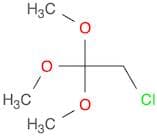
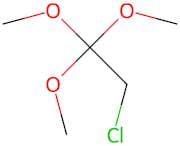
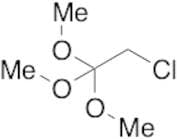
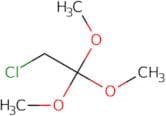
CAS 74974-54-2
:2-chloro-1,1,1-trimethoxyethane
- 1,1,1-Trimethoxy-2-Chloroethane
2-Chloro-1,1,1-trimethoxyethane
CAS:Formula:C5H11ClO3Purity:95%Color and Shape:LiquidMolecular weight:154.5920Ref: IN-DA0036K7
1gTo inquire5g26.00€10g27.00€25g34.00€5kgTo inquire100g75.00€10kgTo inquire25kgTo inquire500g205.00€2-Chloro-1,1,1-trimethoxyethane
CAS:2-Chloro-1,1,1-trimethoxyethanePurity:97%Molecular weight:154.59g/mol2-CHLORO-1,1,1-TRIMETHOXYETHANE
CAS:Formula:C5H11ClO3Purity:96%Color and Shape:LiquidMolecular weight:154.592-Chloro-1,1,1-trimethoxyethane
CAS:Controlled ProductApplications 2-Chloro-1,1,1-trimethoxyethanen is a reactant in the synthesis of α-chloro-β-aminosulfinyl imidates as chiral building blocks
Not a dangerous good if item is equal to or less than 1g/ml and there is less than 100g/ml in the package
References Col0paert, F., et. al.: J. Org. Chem., 76, 2204 (2011)Formula:C5H11ClO3Color and Shape:NeatMolecular weight:154.592-Chloro-1,1,1-trimethoxyethane
CAS:2-Chloro-1,1,1-trimethoxyethane is a reagent that is used in the synthesis of recombinant proteins. It is also used to produce monoclonal antibodies. Fatty acids can be analyzed by using these reagents as they are soluble in this solvent. The structural analysis of fatty acids has been shown to have anticancer activity. 2-Chloro-1,1,1-trimethoxyethane reacts with glycosyl residues on lysine residues in proteins and produces an acid that causes the protein to unfold and denature. This reaction has been shown to have anticancer activity against cervical cancer cells in human liver cells.
Formula:C5H11ClO3Purity:Min. 97.5%Color and Shape:Colorless Clear LiquidMolecular weight:154.59 g/molRef: 3D-FC33078
Discontinued product