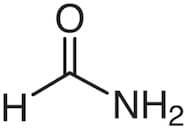
CAS 75-12-7
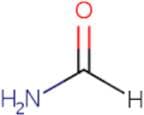
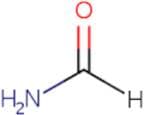
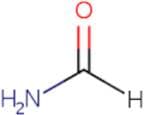
:Formamide
- Carbamaldehyde
- Formamid
- Formamida
- Formamide Hdpe
- Formamide Methanamide
- Formamide, MB Grade (1.12017)
- Formamide, Molecular Biology Grade Methanamide, Molecular Biology Grade
- Formimidic acid
- Methanamide
- Nsc 748
- Formamide
Formamide
CAS:Formula:CH3NOPurity:>98.5%(GC)Color and Shape:Colorless to Almost colorless clear liquidMolecular weight:45.04Formamide, Ultra Pure, 99.5% min
CAS:Formamide is used in the synthesis of medicine, animal glue and other organic compound. It is also used as a solvent which ionizes water-insoluble compounds. It is used as a softening agent for paper and fiber. It is widely used in the fields of the spice, dye, plastic as well as textile industries.
Formula:CH3NOPurity:99.5%Color and Shape:Liquid, Clear, colorlessMolecular weight:45.04Formamide, ACS, 99.5+%
CAS:Formamide is used for cryopreservation of tissues and organs and in hybridization buffers. It acts as an RNA stabilizer in gel electrophoresis by deionizing RNA. It is used as an alternative solvent for the electrostatic self-assembly of polymer nanofilms. It is used in the preparation of brain sectFormula:CH3NOPurity:99.5+%Color and Shape:Clear, colorless, LiquidMolecular weight:45.04Formamide, 99%
CAS:This Thermo Scientific Chemicals brand product was originally part of the Alfa Aesar product portfolio. Some documentation and label information may refer to the legacy brand. The original Alfa Aesar product / item code or SKU reference has not changed as a part of the brand transition to Thermo Sci
Formula:CH3NOPurity:99%Color and Shape:Liquid, Clear colorlessMolecular weight:45.04Formamide, Spectrophotometric Grade, 99+%
CAS:Formamide is used in the synthesis of medicine, animal glue and other organic compound. It is also used as a solvent which ionizes water-insoluble compounds. It is used as a softening agent for paper and fiber. It is widely used in the fields of the spice, dye, plastic as well as textile industries.Formula:CH3NOPurity:99+%Color and Shape:Colorless, LiquidMolecular weight:45.04Formamide
CAS:Formula:CH3NO2Purity:≥ 99.0%Color and Shape:Clear, colourless liquidMolecular weight:45.04Formamide, GlenBiol™, suitable for molecular biology
CAS:Formula:CH3NO2Purity:≥ 99.0%Color and Shape:Clear, colourless liquidMolecular weight:45.04Formamide
CAS:Formamide detects DMF exposure in workers, linked to prostate cancer risk.Formula:CH3NOPurity:99.3%Color and Shape:Colorless LiquidMolecular weight:45.0406Formamide
CAS:Controlled ProductApplications Formamide is a compound that is used in biochemistry to prevent RNA samples from degradation due to RNAses. Formamide is also used as a plasticizer to prepare thermoplastic starch (TPS), a special type of starch that can be mixed with other synthetic polymers because of its unique ability to “flow”.
References Chomczynski, P.: Nuc. Acids Res., 20, 3791 (1992); Ma, X. & Yu, J.: Acta Polym. Sinica 2, No vol. given, 240 (2004); Rodriguez-Gonzalez, F., et al.: Polymer, 44, 1517 (2003); Shi, Q., et al.: Polym. Degrad. Stabil., 96, 175 (2011)Formula:CH3NOColor and Shape:Clear ColourlessMolecular weight:45.04Formamide pure, 98.5%
CAS:Formula:CH3NOPurity:min. 98.5%Color and Shape:Clear, Colourless, LiquidMolecular weight:45.04Formamide for molecular biology, 99.5%
CAS:Formula:CH3NOPurity:min. 99.5%Color and Shape:Clear, Colourless, Liquid, max. 10Molecular weight:45.04Formamide for UV Spectroscopy, 99%
CAS:Formula:CH3NOPurity:min. 99%Color and Shape:Clear, Colourless, LiquidMolecular weight:45.04Formamide ACS, 99.5%
CAS:Formula:CH3NOPurity:min. 99.5%Color and Shape:Clear, Colourless, slightly viscous Liquid, max. 10Molecular weight:45.04Formamide ExiPlus, Multi-Compendial, 99.5%
CAS:Formula:CH3NOPurity:min. 99.5%Color and Shape:Clear, Colourless,oily,hygroscopic, LiquidMolecular weight:45.04Formamide
CAS:Controlled ProductFormamide is a colorless, volatile chemical compound that is most commonly used in the laboratory for the preparation of dna duplexes. It can also be used to treat bowel disease and HIV infection. It is not active against viruses or bacteria but has been shown to bind to toll-like receptors on cells. Formamide is an organic substance that exists as a gas at room temperature and pressure. Formaldehyde reacts with water in the presence of sodium carbonate to form formamide, which is soluble in water. Formamide has been used as a reaction solution for surface methodology experiments because it evaporates quickly and leaves no residue on surfaces. Formamide has been shown to inhibit epidermal growth factor (EGF) activity by binding to the EGF receptor protein and preventing its activation. This inhibition leads to decreased cell proliferation, reduced protein synthesis, and inhibition of DNA replication.
Formula:CH3NOPurity:Min. 95%Color and Shape:Colorless PowderMolecular weight:45.04 g/mol