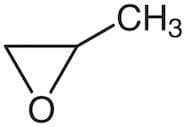
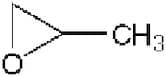
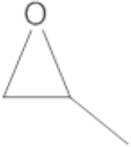
CAS 75-56-9
:(±)-Propylene oxide
Description:
(±)-Propylene oxide, with the CAS number 75-56-9, is a colorless, flammable liquid with a characteristic odor. It is an epoxide, a three-membered cyclic ether, which makes it highly reactive, particularly with nucleophiles. This compound is used primarily as an intermediate in the production of polyether polyols for polyurethane foams, as well as in the synthesis of various chemicals. Its molecular formula is C3H6O, and it has a relatively low boiling point, which contributes to its volatility. The compound exhibits both polar and nonpolar characteristics due to the presence of the ether oxygen, allowing it to dissolve in a variety of solvents. Additionally, (±)-propylene oxide is known for its potential health hazards, including irritation to the skin, eyes, and respiratory system, and it is classified as a possible human carcinogen. Proper handling and safety precautions are essential when working with this substance in industrial and laboratory settings.
Formula:C3H6O
InChI:InChI=1/C3H6O/c1-3-2-4-3/h3H,2H2,1H3
InChI key:InChIKey=GOOHAUXETOMSMM-UHFFFAOYSA-N
SMILES:CC1CO1
Synonyms:- (.+-.)-2-Methyloxirane
- (R,S)-2-Methyl-oxirane
- 1,2-Epossipropano
- 1,2-Epoxipropano
- 1,2-Epoxy-Propan
- 1,2-Epoxypropan
- 1,2-Epoxypropane
- 1,2-Propylene oxide
- 1,2-エポキシプロパン
- 2,3-Epoxypropane
- 2-Methyloxiran
- <span class="text-smallcaps">DL</span>-1,2-Epoxypropane
- AD 6 (suspending agent)
- Ad 6
- Chemogas NV
- DL-1,2-Epoxypropane
- Epihydrin
- Epossipropano, 1,2-
- Epoxipropano, 1,2-
- Epoxypropan, 1,2-
- Epoxypropane
- Époxypropane, 1,2-
- Methyl ethylene oxide
- Methyl oxirane
- Methyloxacyclopropane
- Methyloxiran
- Methyloxirane
- Methyloxiranne
- Metiloxirano
- Ossido di Propilene
- Oxirane, 2-methyl-
- Oxirane, methyl-
- Oxypropylene
- Óxido de propileno
- Propane, 1,2-Epoxy-
- Propene oxide
- Propozone
- Propylene epoxide
- Propyleneoxide
- Propylenoxid
- Propylène, oxyde de
- dl-Propylene oxide
- rac-Propylene oxide
- プロピレンオキシド
- Propylene oxide
- DL-methyloxirane
- caswellno713a
- epoxy-propan
- epapesticidechemicalcode042501
- PO
- ai3-07541
- 3-Methyl-1,2-epoxypropane
- See more synonyms
Sort by
Purity (%)
0
100
|
0
|
50
|
90
|
95
|
100
Found 6 products.
Propylene Oxide
CAS:Formula:C3H6OPurity:>99.0%(GC)Color and Shape:Colorless to Almost colorless clear liquidMolecular weight:58.08(±)-Propylene oxide, >99%
CAS:Propylene oxide is used as a precursor in the production of polyether polyols, which is utilized for making polyurethane plastics, polypropylene glycols, propylene glycol ethers and propylene carbonate. It is involved in the preparation of biological samples for electron microscopy. It plays a vitaFormula:C3H6OPurity:99%Color and Shape:Liquid, ColorlessMolecular weight:58.08Propylene Oxide
CAS:Methyloxirane (propylene oxide)Formula:C3H6OColor and Shape:Colorless LiquidMolecular weight:58.04186(±)-Propylene Oxide
CAS:Controlled ProductStability Volatile
Applications (±)-Propylene Oxide is a carcinogenic substance to rats and potentially humans (1). (±)-Propylene oxide also has the ability to self-polymerize at room temperature in the presence of powdered potassium hydroxide (2). (±)-Propylene oxide is used in industry for fumigation in the food industry, inducing the formation of persistent toxic chlorohydrins. Drinking water contaminant candidate list 3 (CCL 3) compound as per United States Environmental Protection Agency (EPA), environmental, and food contaminants.
E3
References 1. Dunkelberg, H. et al.: Brit. J. Cancer. 1982 Dec;46(6):924-33.2. St. Pierre, L. et al.: J. Am. Chem. Soc. 1956 78 (14), pp 3432–3436Formula:C3H6OColor and Shape:ColourlessMolecular weight:58.08