CAS 75073-15-3
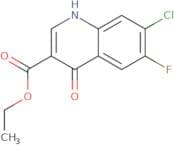
:3-Quinolinecarboxylic acid, 7-chloro-6-fluoro-1,4-dihydro-4-oxo-, ethylester
Description:
3-Quinolinecarboxylic acid, 7-chloro-6-fluoro-1,4-dihydro-4-oxo-, ethyl ester, identified by CAS number 75073-15-3, is a chemical compound that belongs to the class of quinoline derivatives. This substance typically exhibits a complex structure characterized by a quinoline ring fused with a carboxylic acid moiety and an ethyl ester functional group. The presence of chlorine and fluorine substituents at specific positions on the quinoline ring contributes to its unique chemical properties, potentially influencing its reactivity and biological activity. The compound may demonstrate various pharmacological effects, making it of interest in medicinal chemistry and drug development. Its physical properties, such as solubility and melting point, can vary based on the specific conditions and purity of the sample. As with many quinoline derivatives, it may exhibit antimicrobial or antitumor activities, although specific biological data would be necessary to confirm these effects. Proper handling and safety measures should be observed due to the potential toxicity associated with halogenated compounds.
Formula:C12H9ClFNO3
Sort by
Purity (%)
0
100
|
0
|
50
|
90
|
95
|
100
Found 4 products.
Ethyl 7-chloro-6-fluoro-4-oxo-1,4-dihydroquinoline-3-carboxylate
CAS:Purity:95+%Molecular weight:269.66000377-Chloro-6-fluoro-1,4-dihydro-4-oxo-3-quinolinecarboxylic acid ethyl ester
CAS:7-Chloro-6-fluoro-1,4-dihydro-4-oxo-3-quinolinecarboxylic acid ethyl ester is a synthetic compound that has not been evaluated in humans. Studies have shown that the drug can be hydrolyzed to 7-chloro-6-fluoroquinoline 1,1′-(ethylenedioxy)bis(ethane), which is an impurity of norfloxacin. The ethyl esters of 7-chloroquinoline are also known to condense with formaldehyde and hydrolyze to 7-chloroquinolinic acid. This product may contain solvents such as acetone, chloroform, and alcohols that are used during the synthesis process. Decarboxylation of the drug occurs when it is heated at high temperatures in the presence of a catalyst, such as pyridine or sodium methoxide. It decarboxyl
Formula:C12H9ClFNO3Purity:Min. 95%Molecular weight:269.65 g/mol