CAS 7516-31-6
:4(1H)-Pyridinone,2,6-dimethyl-
Description:
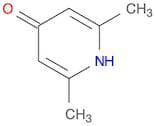
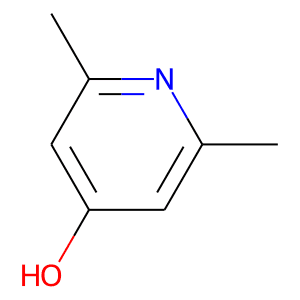
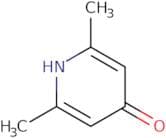
4(1H)-Pyridinone, 2,6-dimethyl- is an organic compound characterized by a pyridine ring with a ketone functional group and two methyl substituents at the 2 and 6 positions. This compound typically exhibits a pale yellow to light brown appearance and is soluble in polar organic solvents. It has a molecular formula that reflects its structure, containing carbon, hydrogen, nitrogen, and oxygen atoms. The presence of the pyridinone moiety suggests potential biological activity, as pyridine derivatives are often found in pharmaceuticals and agrochemicals. The compound may participate in various chemical reactions, including nucleophilic substitutions and condensation reactions, due to the reactivity of the carbonyl group. Its properties, such as melting point, boiling point, and specific reactivity, can vary based on the purity and environmental conditions. Safety data should be consulted for handling, as with many organic compounds, it may pose health risks if ingested or inhaled. Overall, 4(1H)-Pyridinone, 2,6-dimethyl- is of interest in both synthetic chemistry and potential applications in medicinal chemistry.
Formula:C7H9NO
Synonyms:- 4(1H)-Pyridone,2,6-dimethyl- (6CI,7CI,8CI)
- 2,6-Dimethyl-4(1H)-pyridinone
- 2,6-Dimethyl-4(1H)pyridone
- 2,6-Dimethyl-4-pyridinone
- 2,6-Dimethyl-4-pyridone
Sort by
Purity (%)
0
100
|
0
|
50
|
90
|
95
|
100
Found 3 products.
4(1H)-PYRIDINONE,2,6-DIMETHYL-
CAS:Formula:C7H9NOPurity:%Color and Shape:SolidMolecular weight:123.15252,6-Dimethyl-1,4-dihydropyridin-4-one
CAS:2,6-Dimethyl-1,4-dihydropyridin-4-onePurity:98%Molecular weight:123.15g/mol2,6-Dimethyl-1,4-dihydropyridin-4-one
CAS:2,6-Dimethyl-1,4-dihydropyridin-4-one is an organic acid that is used as a surface active agent. It has been shown to have coccidiosis in poultry and can be recycled from reaction solutions. 2,6-Dimethyl-1,4-dihydropyridin-4-one reacts with hydrochloric acid to form salicylic acid and hydrogen chloride gas. Impurities are removed by ion exchange or activated charcoal. Chlorine gas is added to neutralize the solution of 2,6-dimethylpyridine 4-one and convert it into salicylic acid. Finally, the solution is chlorinated to remove any remaining impurities. The organic solvent is then evaporated off and 2,6-dimethylpyridine 4 one crystals are left behind.Formula:C7H9NOPurity:Min. 95%Molecular weight:123.15 g/mol