CAS 75457-13-5
:8-Quinolinol, 3-methyl-
Description:
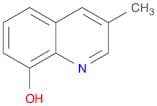
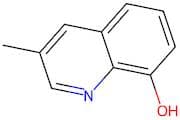
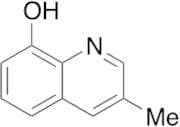
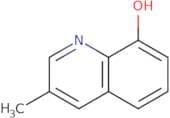
8-Quinolinol, 3-methyl- is an organic compound characterized by its quinoline structure, which consists of a fused benzene and pyridine ring. This compound features a hydroxyl group (-OH) at the 8-position and a methyl group (-CH3) at the 3-position of the quinoline ring. It is typically a pale yellow to brown solid and is soluble in organic solvents. The presence of the hydroxyl group imparts certain chemical properties, such as the ability to form chelates with metal ions, making it useful in various applications, including as a reagent in analytical chemistry and as a potential antimicrobial agent. Additionally, 8-Quinolinol derivatives are often studied for their biological activities, including antifungal and antibacterial properties. Safety data indicates that, like many organic compounds, it should be handled with care, as it may pose health risks if ingested or inhaled. Overall, 8-Quinolinol, 3-methyl- is a compound of interest in both industrial and research settings due to its unique chemical properties and potential applications.
Formula:C10H9NO
Sort by
Purity (%)
0
100
|
0
|
50
|
90
|
95
|
100
Found 5 products.
3-Methyl-8-hydroxyquinoline
CAS:Controlled ProductFormula:C10H9NOColor and Shape:NeatMolecular weight:159.183-Methyl-8-hydroxyquinoline
CAS:<p>3-Methyl-8-hydroxyquinoline (3MQ) is a chemical compound that has been shown to be an inhibitor of the enzyme cyclen. 3MQ binds to the active site of cyclen and blocks the binding of calcium ions, preventing the formation of calcium complexes with cyclen. This inhibition leads to a decrease in cyclen activity and an increase in the synthesis of protein. 3MQ has also been shown to be potent inhibitor against chloride ion currents through voltammetry experiments. It was found that its redox potential is very low, which suggests that it can be used as a probe for electron transfer reactions in cells. The photophysical properties of 3MQ have also been studied and it was found that this molecule absorbs light at wavelengths between 400–600 nm, which may lead to its use as a photosensitizer or photoantagonist for photodynamic therapy.</p>Formula:C10H9NOPurity:Min. 95%Molecular weight:159.18 g/mol