CAS 7579-36-4
:Dibenzyl oxalate
Description:
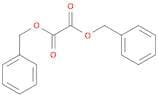
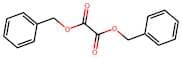
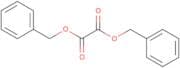
Dibenzyl oxalate is an organic compound characterized by its structure, which consists of two benzyl groups attached to an oxalate moiety. It is typically a colorless to pale yellow liquid with a sweet, fruity odor. This compound is soluble in organic solvents such as ethanol and ether but has limited solubility in water. Dibenzyl oxalate is primarily used in organic synthesis and as an intermediate in the production of various chemicals. It exhibits properties such as being a potential plasticizer and having applications in the fragrance industry due to its aromatic characteristics. Additionally, it may show some degree of reactivity under certain conditions, particularly in the presence of strong acids or bases, leading to hydrolysis or other chemical transformations. Safety precautions should be taken when handling dibenzyl oxalate, as it may cause irritation to the skin and eyes, and proper storage conditions should be maintained to prevent degradation.
Formula:C16H14O4
InChI:InChI=1S/C16H14O4/c17-15(19-11-13-7-3-1-4-8-13)16(18)20-12-14-9-5-2-6-10-14/h1-10H,11-12H2
InChI key:InChIKey=ZYZXGWGQYNTGAU-UHFFFAOYSA-N
SMILES:C(OC(C(OCC1=CC=CC=C1)=O)=O)C2=CC=CC=C2
Synonyms:- Benzyl oxalate
- Dibenzyl Ethanedioate
- Dibenzyl Oxalate
- Ethanedioic acid bis(phenylmethyl) ester
- Ethanedioic acid, 1,2-bis(phenylmethyl) ester
- Hs 2046
- NSC 52550
- Oxalic Acid Dibenzyl Ester
Sort by
Purity (%)
0
100
|
0
|
50
|
90
|
95
|
100
Found 4 products.
Dibenzyl oxalate
CAS:Formula:C16H14O4Purity:95%Color and Shape:No data available.Molecular weight:270.284Dibenzyl oxalate
CAS:Dibenzyl oxalate is an activated ester that reacts with a hydroxyl group in the presence of a base. The reaction mechanism consists of two steps: (1) proton abstraction from the alcohol, followed by (2) nucleophilic attack on the carbonyl carbon. Activation is achieved by heating or irradiation, which produces reactive radicals. Dibenzyl oxalate is soluble in organic solvents and melts at 176 °C. It has a colorless to yellow liquid with a boiling point of 240 °C and a low melting point of -54 °C. This compound has been used as an intermediate in organic synthesis reactions, but it may also be used as an antioxidant or radiation absorber, due to its heat-sensitive properties and high reactivity. It is also used as a reagent for the synthesis of malonic acid derivatives, such as diphenyl ethers and hydroxybenzoic acids.Formula:C16H14O4Purity:Min. 95%Molecular weight:270.28 g/mol