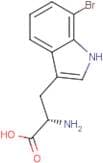
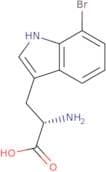
CAS 75816-19-2
:7-BROMO-L-TRYPTOPHAN
Description:
7-Bromo-L-tryptophan is a halogenated derivative of the amino acid L-tryptophan, characterized by the presence of a bromine atom at the 7-position of the indole ring. This modification can influence its biochemical properties and interactions. As an amino acid, it plays a role in protein synthesis and can serve as a precursor for various bioactive compounds, including neurotransmitters like serotonin. The introduction of the bromine atom may enhance its reactivity and alter its solubility compared to L-tryptophan. 7-Bromo-L-tryptophan is often utilized in biochemical research, particularly in studies related to protein structure and function, as well as in the development of pharmaceuticals. Its unique properties can also make it a valuable tool in the study of enzyme mechanisms and metabolic pathways. As with many halogenated compounds, safety precautions should be observed when handling this substance due to potential toxicity and environmental impact.
Formula:C11H11BrN2O2
Synonyms:- 7-Chloro-4-hydroxyquinoline-2-carboxylic acid
- 7-Cl-KYNA
- 7-Chloro-4-Hydroxy-2-Carboxyquinoline
- 7-Chlorokynurenic acid
- 7'-bromo-L-tryptophan
Sort by
Purity (%)
0
100
|
0
|
50
|
90
|
95
|
100
Found 4 products.
7-Bromo-l-tryptophan
CAS:Formula:C11H11BrN2O2Purity:98%Color and Shape:SolidMolecular weight:283.12127-Bromo-L-tryptophan
CAS:7-Bromo-L-tryptophan is an amino acid that belongs to the class of aromatic compounds. It can be produced by the cross-coupling reaction of 7-bromoindole and L-tryptophan in aqueous solution. The biosynthesis of 7-bromo-L-tryptophan is achieved by corynebacterium glutamicum, which is a gram negative bacterium. This strain contains two genes encoding enzymes required for this process: anthranilate synthase and dehydrogenase. 7-Bromo L-tryptophan can be converted into anthranilic acid with high yield (>90%) at neutral pH; however, it is only active at acidic pH (pH 2). This compound has been used in a bioassay as a substrate for growth rate determination of corynebacterium strains.Formula:C11H11BrN2O2Purity:Min. 95%Color and Shape:PowderMolecular weight:283.12 g/mol