CAS 7585-20-8
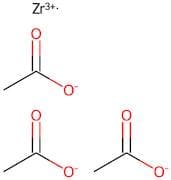
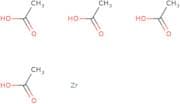
:Acetic acid, zirconium salt (1:?)
Description:
Acetic acid, zirconium salt (1:?) is an inorganic compound characterized by its formation from zirconium and acetic acid. It typically appears as a white to off-white solid and is soluble in water, which allows it to be utilized in various applications, particularly in the field of ceramics and as a precursor in the synthesis of zirconium-based materials. This compound is known for its ability to form stable complexes with various anions and is often used in the production of zirconium oxide, which has applications in catalysis, electronics, and as a refractory material. Additionally, it exhibits properties that make it useful in the formulation of coatings and adhesives. Safety considerations include handling it with care, as it may cause irritation to the skin and eyes. Overall, acetic acid, zirconium salt plays a significant role in materials science and industrial applications due to its unique chemical properties and reactivity.
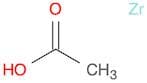
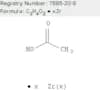
Formula:C2H4O2·xZr
InChI:InChI=1S/C2H4O2.Zr/c1-2(3)4;/h1H3,(H,3,4);
InChI key:InChIKey=BNUDRLITYNMTPD-UHFFFAOYSA-N
SMILES:C(C)(O)=O.[Zr]
Synonyms:- Acetate de zirconium
- Acetato De Circonio
- Acetic acid, zirconium salt (1:?)
- Hti 9880M
- Zirconium Acetate
- Zirconiumacetat
- Zircosol ZA 20
- Acetic acid, zirconium salt
Sort by
Purity (%)
0
100
|
0
|
50
|
90
|
95
|
100
Found 3 products.
Zirconium (III) Acetate, 22% Solution
CAS:Zirconium (III) Acetate, 22% SolutionPurity:≥95%Color and Shape:Pale Yellow SolutionMolecular weight:268.36g/molZirconium acetate, in dilute acetic acid, ca. 16% Zr
CAS:Zirconiumacetatesolution is a particle that is inorganic and metallic in nature. It has a thermal expansion of about 6.3 x 10⁻⁶ K-1, which is comparable to the thermal expansion of fatty acids. Zirconiumacetate can be used as an adsorbent for the removal of fatty acid from wastewater, with an optimum concentration at 2.5%. This solution has a chemical stability that can last up to 5 years and does not require any special conditions for storage. Zirconiumacetate has been shown to have oxidation catalyst properties, including thermodynamic data and electrochemical impedance spectroscopy, which allow it to produce zirconium oxide or zirconia.
Formula:C2H4O2•ZrxPurity:Min. 95%Color and Shape:Clear LiquidMolecular weight:327.4 g/mol