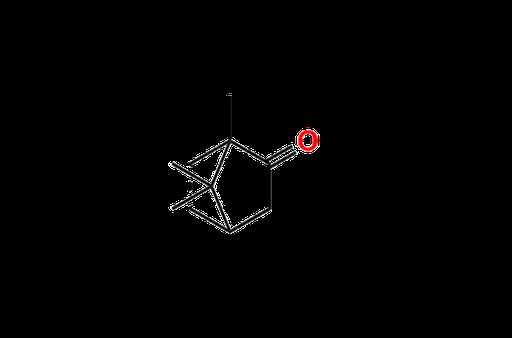
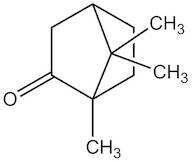
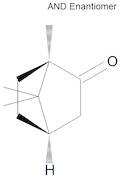
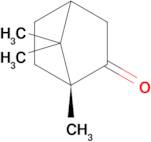
CAS 76-22-2
:(±)-Camphor
Description:
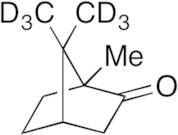
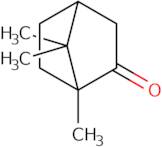
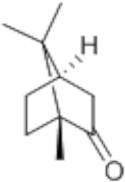
(±)-Camphor, with the CAS number 76-22-2, is a bicyclic monoterpene ketone that is derived from the wood of the camphor tree (Cinnamomum camphora) and can also be synthesized from other sources. It appears as a white crystalline solid with a characteristic aromatic odor. Camphor is known for its distinctive cooling sensation and is used in various applications, including medicinal, culinary, and cosmetic products. It exhibits a melting point around room temperature and is soluble in organic solvents but has limited solubility in water. The compound possesses both analgesic and anti-inflammatory properties, making it a common ingredient in topical ointments and rubs. Additionally, (±)-Camphor has been utilized in traditional medicine and is recognized for its potential as a natural insect repellent. Its chiral nature means it exists in two enantiomeric forms, but the racemic mixture is often used in commercial applications. Safety considerations include potential skin irritation and toxicity at high doses, necessitating careful handling.
Formula:C10H16O
InChI:InChI=1S/C10H16O/c1-9(2)7-4-5-10(9,3)8(11)6-7/h7H,4-6H2,1-3H3
InChI key:InChIKey=DSSYKIVIOFKYAU-UHFFFAOYSA-N
SMILES:CC12C(C)(C)C(CC1=O)CC2
Synonyms:- 1,7,7-Trimethyl-bicyclo [2,2,1] heptanone-2
- 1,7,7-Trimethylbicyclo(2.2.1)heptan-2-one
- 1,7,7-Trimethylbicyclo[2.2.1]-2-heptanone
- 1,7,7-Trimethylnorcamphor
- 2-Bornanone
- 2-Camphanone
- <span class="text-smallcaps">DL</span>-Camphor
- Alphanon
- Bicyclo[2.2.1]heptan-2-one, 1,7,7-trimethyl-
- Bornan-2-Ona
- Bornan-2-One
- Bornan-2-One, Dl-
- Bornan-2-on
- Bornane-2-One
- Borneo camphor
- Campher
- DL-Camphor
- Hcxl 8899
- Racemic camphor
- Root bark oil
- Spirit of camphor
- Camphor
- Synthetic camphor
- See more synonyms
Sort by
Purity (%)
0
100
|
0
|
50
|
90
|
95
|
100
Camphor
CAS:1,7,7-Trimethylbicyclo[2.2.1]heptan-2-oneFormula:C10H16OPurity:96%Molecular weight:152.23DL-Camphor
CAS:Alicyclic ketoneFormula:C10H16OPurity:≥ 90.0 % (GC)Color and Shape:PowderMolecular weight:152.24(±)-Camphor
CAS:Applications (±)-Camphor, has a strong aromatic odor. It is toxic to insects so it can be used as repellent. Camphor can also be used as a plasticizer for nitrocellulose, as a moth repellent, and as an antimicrobial substance.This compound is a contaminant of emerging concern (CECs)EC Number: 200-945-0
Not a dangerous good if item is equal to or less than 1g/ml and there is less than 100g/ml in the package
References Abdelgaleil, S.A.M. Appl. Entomol. Zool., 45, 425 (2010); Tabanca, N. et al.: J. Agric. Food. Chem., 49, 4300 (2001);Formula:C10H16OColor and Shape:NeatMolecular weight:152.23Camphor
CAS:Camphor is a natural compound that has been shown to be an effective antimicrobial agent. Camphor has been shown to inhibit the growth of bacteria by binding to the bacterial membrane, inhibiting electron transport and leading to a decrease in mitochondrial membrane potential. Camphor also inhibits the growth of cancer cells in experimental models. Camphor can be used as an antimicrobial in wastewater treatment and as an insect repellent for skin protection. Camphor is also used in x-ray crystallography to determine structures of proteins and other organic molecules with high electron density such as benzalkonium chloride.Formula:C10H16OPurity:Min. 95%Color and Shape:Colorless Clear LiquidMolecular weight:152.23 g/molCamphor pure, 95%
CAS:Formula:C10H16OPurity:min. 95.0%Color and Shape:White, Crystalline compound with characteristic odour, Clear, ColourlessMolecular weight:152.2