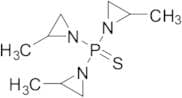
CAS 76-96-0
:Methiotepa
- 1,1′,1′′-Phosphinothioylidynetris[2-methylaziridine]
- Ai3-50004
- Aziridine, 1,1',1''-phosphinothioylidynetris(2-methyl- (9CI)
- Aziridine, 1,1′,1′′-phosphinothioylidynetris[2-methyl-
- Ent 161A
- Ent 50782
- Maps
- Metapside
- Methiotepa
- NSC 56843
- Nsc 54055
- Phosphine sulfide, tris(2-methyl-1-aziridinyl)-
- Phosphine sulfide, tris(2-methyl-1-aziridinyl)- (8CI)
- Tris(2-methyl-1-aziridinyl)phosphine sulfide
- 1,1',1''-Phosphorothioyltris(2-methylaziridine)
- tris(2-methylaziridin-1-yl)-sulfanylidene-$l^{5}-phosphane
- See more synonyms
Methiotepa
CAS:Methiotepa is a potent anticancer drug that has been used for the treatment of various types of tumors. It is a Chinese hamster ovary (CHO) cell-derived analog of chitin, which inhibits the activity of protein kinase C. Methiotepa induces apoptosis in cancer cells by inhibiting DNA synthesis and repair, leading to cell death. This drug has also been shown to be a potent inhibitor of heparin-induced platelet aggregation in human blood. Methiotepa has been found to be effective against a wide range of cancers, including breast, lung, ovarian, and bladder cancer, among others. Its use as an anticancer agent may be due to its ability to inhibit the activity of various kinases and other enzymes involved in cancer cell proliferation and survival.
Formula:C9H18N3PSPurity:Min. 95%Molecular weight:231.3 g/mol