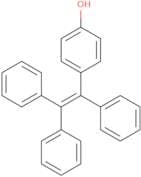
CAS 76115-06-5
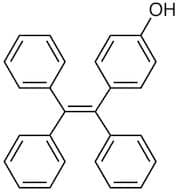
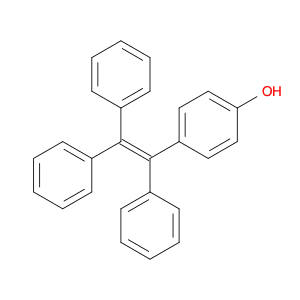
:Phenol, 4-(triphenylethenyl)-
Description:
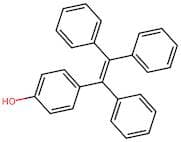
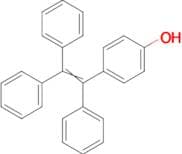
Phenol, 4-(triphenylethenyl)-, also known by its CAS number 76115-06-5, is an organic compound characterized by the presence of a phenolic hydroxyl group (-OH) attached to a carbon atom that is also bonded to a triphenylethenyl group. This structure imparts unique properties, including its potential use in organic synthesis and materials science. The compound typically exhibits a solid state at room temperature and is known for its aromatic characteristics due to the presence of multiple phenyl rings, which contribute to its stability and reactivity. It may display interesting optical properties, making it a candidate for applications in photonics or as a dye. Additionally, the presence of the hydroxyl group suggests potential for hydrogen bonding, influencing its solubility and interaction with other substances. Safety considerations should be taken into account, as phenolic compounds can be toxic and require careful handling in laboratory settings. Overall, Phenol, 4-(triphenylethenyl)- is a versatile compound with applications in various fields of chemistry.
Formula:C26H20O
Sort by
Purity (%)
0
100
|
0
|
50
|
90
|
95
|
100
Found 5 products.
4-(1,2,2-Triphenylvinyl)phenol
CAS:Formula:C26H20OPurity:>95.0%(GC)Color and Shape:White to Almost white powder to crystalMolecular weight:348.454-(1,2,2-Triphenylethenyl)phenol
CAS:Formula:C26H20OPurity:96%Color and Shape:SolidMolecular weight:348.43644-(1,2,2-Triphenylvinyl)phenol
CAS:4-(1,2,2-Triphenylvinyl)phenolPurity:98%Molecular weight:348.45g/mol4-(1,2,2-triphenylvinyl)phenol
CAS:4-(1,2,2-triphenylvinyl)phenol is a fluorescent molecule that can be used as a biomarker for Listeria monocytogenes. The fluorescence of 4-(1,2,2-triphenylvinyl)phenol is quenched when it binds to the bacteria and then restored when it is removed from the bacteria. This molecule has been shown to bind to bacterial DNA and proteins. It has also been shown to have hydrophobic properties and can be used for fingerprint analysis. 4-(1,2,2-triphenylvinyl)phenol has been synthesized through a Suzuki coupling reaction with chloroacetophenone and 1,4-dibromobutane. It has two isomers: one with two phenyl groups on either side of the vinyl group and one with only one phenyl group on either side of the vinyl group.Formula:C26H20OPurity:Min. 95%Color and Shape:SolidMolecular weight:348.44 g/mol