CAS 76144-81-5
:Meldonium
Description:
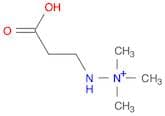
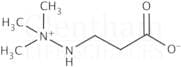
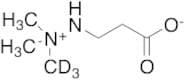
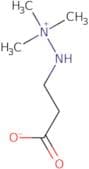
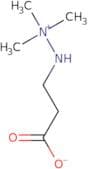
Meldonium, also known as Mildronate, is a synthetic compound primarily used as a medication to treat ischemic heart conditions and enhance physical performance. It was developed in the 1970s in Latvia and is classified as a metabolic modulator. The chemical formula for meldonium is C5H13N1O2, and it features a unique structure that includes a 1,2,4-triazole ring. Meldonium works by inhibiting the enzyme carnitine acyltransferase, which plays a role in fatty acid metabolism, thereby promoting glucose utilization over fatty acids for energy production. This shift can enhance endurance and reduce fatigue during physical exertion. The substance has gained attention in sports due to its performance-enhancing effects, leading to its inclusion on the World Anti-Doping Agency's list of prohibited substances. While it is generally well-tolerated, potential side effects may include headaches, dizziness, and gastrointestinal disturbances. Its use should be monitored, especially in individuals with pre-existing health conditions.
Formula:C6H14N2O2
InChI:InChI=1/C8H17NO5/c10-2-1-9-3-6(12)8(14)7(13)5(9)4-11/h5-8,10-14H,1-4H2/t5?,6-,7-,8?/m1/s1
InChI key:InChIKey=PVBQYTCFVWZSJK-UHFFFAOYSA-N
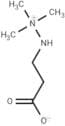
SMILES:N(CCC([O-])=O)[N+](C)(C)C
Synonyms:- 1,1,1-Trimethyl-2-(2-carboxyethyl)hydrazine zwitterion
- 2-(2-Carboxyethyl)-1,1,1-Trimethylhydrazinium Hydroxide Inner Salt
- 2-(2-Carboxyethyl)-1,1,1-trimethyl Hydrazinium Inner Salt
- 3-(2,2,2-Trimethylhydrazine)Propionate
- 3-(2,2,2-Trimethylhydrazinium)propionate
- 3-(Trimethylammonioamino)Propanoate
- 3-[(Trimethylazaniumyl)amino]propanoate
- Hydrazinium, 2-(2-carboxyethyl)-1,1,1-trimethyl-, inner salt
- Hydrinol
- Idrinol
- Meldomiun
- Meldonium
- Met 88
- Met88
- Mildonate
- Quateri
- Quaterin
- Vasonat
- Mildronate
- N-Trimethyl-hydrazine-3-propionate
- 1,1,1-Trimethylhydrazinium 2-propionate
- 3-[(Trimethylaminio)amino]propionic acidanion
- 2-(2-Carboxylatoethyl)-1,1,1-trimethylhydrazinium
- See more synonyms
Sort by
Purity (%)
0
100
|
0
|
50
|
90
|
95
|
100
Found 9 products.
1,1,1-Trimethyl-2-(2-carboxyethyl)hydrazine zwitterion
CAS:Formula:C6H14N2O2Purity:98%Color and Shape:SolidMolecular weight:146.1876Mildronate-d3 HCl
CAS:Formula:C6H11D3N2O2·HClColor and Shape:White To Off-White SolidMolecular weight:149.21 36.46Mildronate
CAS:Formula:C6H14N2O2Purity:≥ 98.0%Color and Shape:White to off-white crystalline powderMolecular weight:146.19Mildronate
CAS:Mildronate (Meldonium) is an inhibitor of biosynthesis of L-carnitine by gamma-butyrobetaine (GBB) hydroxylase and as a competitive inhibitor of renal carnitineFormula:C6H14N2O2Purity:99.94%Color and Shape:White Crystalline PowderMolecular weight:146.19Mildronate-d3
CAS:Controlled ProductStability Very Hygroscopic
Applications Mildronate-d3 is the labeled analogue of Mildronate (M344450), a novel pharmaceutical composition based on a reverse transcriptase inhibitor and meldonium. May contain a significant amount of water.Formula:C6H11D3N2O2Color and Shape:White To Off-WhiteMolecular weight:149.21Meldonium
CAS:Controlled ProductMildronate is a drug with a matrix effect that has been shown to be effective in experimental models. Mildronate is used to treat cardiac arrhythmias and myocardial infarcts, as well as other cardiovascular diseases. Mildronate also has pharmacological effects on the brain, including protecting against brain toxicity and improving cognitive functions. The drug has been shown to have an effect on the blood pressure, energy metabolism, and pharmacological treatment of diseases. Mildronate was discovered during an analytical study of erythrocyte membranes and its effects were studied in detail. It was found that mildronate improved the membrane's stability and increased its resistance to hemolysis. This discovery led scientists to investigate mildronate as a possible treatment for heart conditions involving blood clots or low blood flow.Formula:C6H14N2O2Purity:Min. 95%Color and Shape:PowderMolecular weight:146.19 g/molMeldonium
CAS:Controlled ProductMeldonium is a cardiovascular drug, which is a synthetic compound originating from Latvia. It functions by modulating carnitine metabolism, leading to decreased fatty acid oxidation and augmented glucose oxidation. This shift in energy substrate helps to improve energy efficiency, particularly under conditions of ischemia, which can prevent ischemic damage by balancing oxygen supply and demand.Formula:C6H14N2O2Purity:Min. 95 Area-%Molecular weight:146.19 g/mol