CAS 76376-43-7
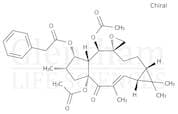
:Euphorbia Factor L1
Description:
Euphorbia Factor L1, with the CAS number 76376-43-7, is a chemical compound derived from the Euphorbia plant species, known for its diverse phytochemical properties. This substance is classified as a diterpene, which is a type of terpenoid characterized by its structure consisting of four isoprene units. Euphorbia Factor L1 exhibits notable biological activities, including potential anti-inflammatory and cytotoxic effects, making it of interest in pharmacological research. Its mechanism of action may involve modulation of cellular pathways, although specific details regarding its interactions and efficacy are still under investigation. The compound is typically studied in the context of natural product chemistry and may have implications in drug development, particularly in the search for novel therapeutic agents. As with many plant-derived compounds, safety and toxicity profiles are essential considerations in its application. Further research is necessary to fully elucidate its properties and potential uses in medicine and other fields.
Formula:C32H40O8
Sort by
Purity (%)
0
100
|
0
|
50
|
90
|
95
|
100
Found 5 products.
Euphorbia factor L1
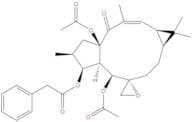
CAS:Euphorbia factor L1 inhibits osteoclastogenesis and induces osteoclast apoptosis, it can enhance the ATP hydrolysis activity of ABCB1 stimulated by verapamil. Euphorbia factor L1 inhibits the efflux of ABCB1 in KBv200 and MCF-7/adr cells, does not downregulate their expression either in mRNA or protein level.Formula:C32H40O8Purity:95%~99%Color and Shape:Cryst.Molecular weight:552.664Euphorbia factor L1
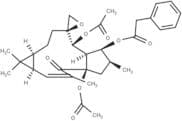
CAS:Euphorbia factor L1 (Euphorbiasteroid), a diterpenoid in sequestra, decreases Bcl-2, PI3K, AKT and mTOR and upregulates caspase-9 and caspase-3.Formula:C32H40O8Purity:98.16% - ≥95%Color and Shape:SolidMolecular weight:552.66Euphorbia factor L1
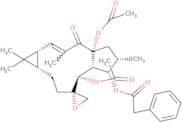
CAS:Controlled ProductEuphorbia factor L1 is a protein that inhibits the production of prostaglandin E2 by inhibiting cyclooxygenase-2 (COX-2). The inhibition of COX-2 results in decreased production of prostaglandins, which are involved in the inflammatory response. This factor also has anti-cancer properties, as it induces apoptosis and autophagy in tumor cells. Euphorbia factor L1 binds to the mitochondrial membrane potential, preventing the influx of calcium ions into mitochondria. It also inhibits acetate extract-induced cell death and has been shown to be effective against K562 cells and phorbol esters. Euphorbia factor L1 is a mitochondrial cytochrome that can reversibly bind to respiratory complexes I and II.Formula:C32H40O8Purity:Min. 95%Molecular weight:552.66 g/mol