CAS 7646-78-8
:Tin tetrachloride
Description:
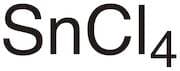
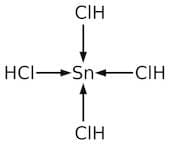
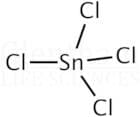
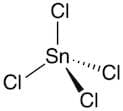
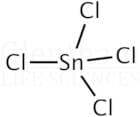
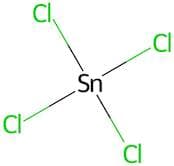
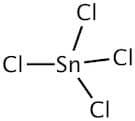
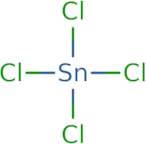
Tin tetrachloride, also known as stannic chloride, is an inorganic compound with the formula SnCl4. It is a colorless, volatile liquid at room temperature, characterized by its strong, pungent odor. Tin tetrachloride is highly soluble in organic solvents and reacts with water to produce hydrochloric acid and tin oxide, making it a strong Lewis acid. It has a tetrahedral molecular geometry, with tin at the center surrounded by four chlorine atoms. This compound is primarily used in the production of organotin compounds, as a catalyst in various chemical reactions, and in the synthesis of other tin-based materials. Due to its corrosive nature, it poses health hazards, including respiratory irritation and skin burns upon contact. Proper handling and storage in a controlled environment are essential to mitigate risks associated with its use. Additionally, tin tetrachloride can form complexes with various ligands, further expanding its utility in coordination chemistry.
Formula:Cl4Sn
InChI:InChI=1S/4ClH.Sn/h4*1H;/q;;;;+4/p-4
InChI key:InChIKey=HPGGPRDJHPYFRM-UHFFFAOYSA-J
SMILES:[Sn](Cl)(Cl)(Cl)Cl
Synonyms:- Libavius Fuming spirit
- Nsc 209802
- Stannic chloride
- Stannic chloride (anhydrous)
- Stannic tetrachloride
- Tetrachlorostannane
- Tetrachlorotin
- Tetrachlorure d'etain
- Tetracloruro De Estano
- Tin (Iv) Tetrachloride
- Tin Tetrachloride
- Tin chloride (SnCl4)
- Tin chloride (SnCl<sub>4</sub>)
- Tin(IV) chloride
- Zinn(Iv)-Chlorid
- Zinntetrachlorid
- Tin chloride
- stannic chloride fuming
- Stannous chloride
- Stagno (tetracloruro di)
- Tin (IV) chloride anhydrous
- Stannane, tetrachloro-
- Stannic chloride, anhydrous [UN1827] [Corrosive]
- Tin(4+) tetrachloride
- Tin(IV) chloride PENTAHYDRATE
- stannane, tetrachloro-
- See more synonyms
Sort by
Purity (%)
0
100
|
0
|
50
|
90
|
95
|
100
Found 16 products.
Tin(IV) Chloride (ca. 1.0mol/L in Dichloromethane)
CAS:Formula:SnCl4Color and Shape:Colorless to Almost colorless clear liquidMolecular weight:260.51Tin(IV) chloride, anhydrous, 98% (metals basis)
CAS:Tin(IV) chloride is a precursor to prepare organotin compounds such as tetralkyltin and dialkyldichlorotin(IV), which find applications as catalysts and polymer stabilizers. As a Lewis acid catalyst, it is used in Fridel-Crafts reactions for alkylation and cyclization. It is involved in the selectivFormula:Cl4H4SnPurity:98%Molecular weight:264.54Tin(IV) chloride, 99.99% (metals basis)
CAS:Tin(IV) chloride is a precursor to prepare organotin compounds such as tetralkyltin and dialkyldichlorotin(IV), which finds application as catalysts and polymer stabilizers. As a Lewis acid catalyst, it is used in Fridel-Crafts reactions for alkylation and cyclization. It is involved in the selectivFormula:Cl4H4SnPurity:99.99%Molecular weight:264.54Tin(IV) chloride, anhydrous (99.99-Sn%) PURATREM
CAS:Tin(IV) chloride, anhydrous (99.99-Sn%) PURATREM
Formula:SnCl4Purity:99.99-Sn%Color and Shape:colorless liq.Molecular weight:260.50Tin(IV) Chloride anhydrous
CAS:Formula:Cl4SnPurity:≥ 98.0%Color and Shape:Clear, colourless to pale yellow liquidMolecular weight:260.50Tin(IV) chloride, anhydrous, 98%
CAS:Tin(IV) chloride, anhydrous, 98%
Formula:SnCl4Purity:98%Color and Shape:colorless liq.Molecular weight:260.50Tin(IV) chloride, anhydrous, 99.99%
CAS:Formula:SnCl4Purity:≥ 99.99%Color and Shape:Clear, colourless liquidMolecular weight:260.50Tin(IV) chloride
CAS:Tin(IV) chloridePurity:99.99%Color and Shape:Colourless To Pale Yellow LiquidMolecular weight:260.52g/molTin IV chloride, anhydrous
CAS:SNT7930 - Tin IV chloride, anhydrous
Formula:Cl4SnPurity:0.999Color and Shape:Liquid, ClearMolecular weight:260.51Stannic Chloride anhydrous extrapure, 99%
CAS:Formula:SnCl4Purity:min. 99%Color and Shape:Clear, Colourless to slight yellow, LiquidMolecular weight:260.52Stannic Chloride 1M in Dichloromethane
CAS:Formula:SnCl4Color and Shape:Clear, Pale yellow to yellow, LiquidMolecular weight:Â 260.52Stannic Chloride 1M in Toluene
CAS:Formula:SnCl4Color and Shape:Clear, Pale yellow to yellow fuming, LiquidMolecular weight:260.52Stannic Chloride 1M in Heptane
CAS:Formula:SnCl4Color and Shape:Clear, Colourless, LiquidMolecular weight:Â 260.52Tin (IV) chloride
CAS:Tin (IV) chloride is an inorganic acid that is soluble in water and methanol. It can be used to synthesize picolinic acid, which is a product of the reaction between dextran sulfate and trifluoroacetic acid. Tin (IV) chloride has been shown to inhibit the growth of bacteria by binding to the surface of the cell wall, inhibiting the synthesis of proteins necessary for bacterial growth. Tin (IV) chloride also reacts with copper chloride or hydrogen fluoride, forming a surface layer that inhibits bacterial growth. Tin (IV) chloride has been shown to have strong inhibitory properties against Clostridium perfringens.
Formula:SnCl4Purity:Min. 95%Color and Shape:Colorless Clear LiquidMolecular weight:260.52 g/mol