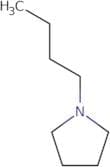
CAS 767-10-2
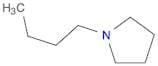
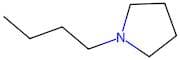
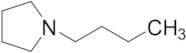
:1-Butylpyrrolidine
Description:
1-Butylpyrrolidine is a cyclic amine characterized by a five-membered ring structure containing a nitrogen atom and a butyl substituent. Its molecular formula is C₇H₁₄N, indicating it is composed of carbon, hydrogen, and nitrogen. This compound is typically a colorless to pale yellow liquid with a distinctive amine-like odor. It is soluble in organic solvents and exhibits moderate polarity, making it useful in various chemical applications, including as a solvent and a reagent in organic synthesis. 1-Butylpyrrolidine is known for its ability to act as a nucleophile due to the presence of the nitrogen atom, which can participate in various chemical reactions, including alkylation and acylation. Additionally, it has potential applications in the pharmaceutical industry, particularly in the synthesis of biologically active compounds. Safety considerations include handling it in well-ventilated areas and using appropriate personal protective equipment, as it may cause irritation upon contact with skin or eyes.
Formula:C8H17N
InChI:InChI=1S/C8H17N/c1-2-3-6-9-7-4-5-8-9/h2-8H2,1H3
InChI key:InChIKey=JSHASCFKOSDFHY-UHFFFAOYSA-N
SMILES:C(CCC)N1CCCC1
Synonyms:- N-Butylpyrrolidine
- N-Butyltetrahydropyrrole
- Pyrrolidine, 1-butyl-
- 1-Butylpyrrolidine
Sort by
Purity (%)
0
100
|
0
|
50
|
90
|
95
|
100
Found 5 products.
1-Butylpyrrolidine
CAS:1-Butylpyrrolidine is a pyrrole derivative widely used in biochemical experiments and drug synthesis research.Formula:C8H17NColor and Shape:SolidMolecular weight:127.231-Butylpyrrolidine
CAS:Controlled ProductApplications 1-Butylpyrrolidine (cas# 767-10-2) is a useful research chemical.
Formula:C8H17NColor and Shape:ColourlessMolecular weight:127.231-Butylpyrrolidine
CAS:1-Butylpyrrolidine is a colorless liquid that belongs to the class of anions. It has been used for the determination of viscosity and redox potentials in animal experiments. 1-Butylpyrrolidine reacts with amines to form chromatographic systems with different functional groups. It has also been used in analytical methods such as gas chromatography and high performance liquid chromatography. The product can be used as a solvent for chlorine, copper chromite, monocarboxylic acids, and carbon tetrachloride. It also has transport properties and can be used as a matrix effect for solvents such as hexane or dichloromethane.
Formula:C8H17NPurity:Min. 95%Color and Shape:Colorless PowderMolecular weight:127.23 g/molRef: 3D-FB45924
Discontinued product