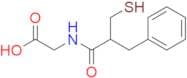
CAS 76721-89-6
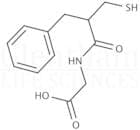
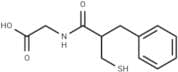
:Thiorphan
Description:
Thiorphan, with the CAS number 76721-89-6, is a potent and selective inhibitor of the enzyme neprilysin, which plays a crucial role in the degradation of various neuropeptides and peptides involved in pain modulation and cardiovascular regulation. This compound is characterized by its ability to enhance the levels of endogenous peptides, thereby influencing physiological processes such as pain perception and blood pressure regulation. Thiorphan is typically presented as a white to off-white solid and is soluble in water and organic solvents, making it versatile for various applications in biochemical research. Its mechanism of action involves the inhibition of neprilysin, leading to increased concentrations of peptides like enkephalins and substance P. Due to its pharmacological properties, thiorphan has been studied for potential therapeutic applications in conditions such as hypertension and pain management. However, its use in clinical settings is limited, and further research is needed to fully understand its effects and potential side effects.
Formula:C12H15NO3S
InChI:InChI=1S/C12H15NO3S/c14-11(15)7-13-12(16)10(8-17)6-9-4-2-1-3-5-9/h1-5,10,17H,6-8H2,(H,13,16)(H,14,15)
InChI key:InChIKey=LJJKNPQAGWVLDQ-UHFFFAOYSA-N
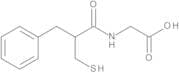
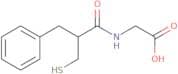
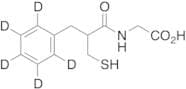
SMILES:C(C(C(NCC(O)=O)=O)CS)C1=CC=CC=C1
Synonyms:- Glycine, N-[2-(mercaptomethyl)-1-oxo-3-phenylpropyl]-, (±)-
- Thiorphan
- Glycine, N-[2-(mercaptomethyl)-1-oxo-3-phenylpropyl]-
- (±)-Thiorphan
- N-[2-(Mercaptomethyl)-1-oxo-3-phenylpropyl]glycine
Sort by
Purity (%)
0
100
|
0
|
50
|
90
|
95
|
100
Found 14 products.
DL-Thiorphan
CAS:Thiorphan has the ability to block the degradation of the luteinizing hormone releasing hormone (LHRH). At higher concentrations, (14 ?M) this compound has been shown to inhibit the activity of angiotensin-converting enzyme (ACE). Neprilysin is overexpressed in many forms of cancer and may play a roFormula:C12H15NOSMolecular weight:253.32DL-Thiorphan
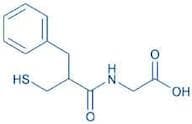
CAS:Potent and specific inhibitor of neprilysin with antinociceptive activity. Thiorphan is cleaved by peptidylglycine α-amidating monooxygenase yielding 2-benzyl-3-mercaptopropionamide.Formula:C12H15NO3SPurity:> 99%Color and Shape:White PowderMolecular weight:253.322-[(2-benzyl-3-sulfanylpropanoyl)amino]acetic acid
CAS:Formula:C12H15NO3SPurity:98%Color and Shape:SolidMolecular weight:253.3174DL-Thiorphan
CAS:Formula:C12H15NOSPurity:≥ 97.0%Color and Shape:White or almost white powderMolecular weight:253.32Thiorphan
CAS:Thiorphan is an neprilysin inhibitor (NEP; IC50 : 0.007 μM).Formula:C12H15NO3SPurity:99.33%Color and Shape:Off-White SolidMolecular weight:253.32Ref: TM-T7693
2mg35.00€5mg52.00€10mg93.00€25mg170.00€50mg255.00€100mg379.00€500mg870.00€1mL*10mM (DMSO)58.00€Thiorphan
CAS:Thiorphan is a drug that was originally developed as an experimental anti-inflammatory agent. It is also used as a research tool to study the pulmonary hypertension in experimental models. Thiorphan has been shown to inhibit the polymerase chain reaction (PCR) of DNA, which may be due to its ability to bind and inhibit the activity of enzymes such as picolinic acid hydrolase and carboxypeptidase A2. This drug has been shown to have no effect on locomotor activity or atrial contractility, but does cause neuronal death in the caudate putamen. Thiorphan has also been shown to be an inhibitor of phosphodiesterases, which are enzymes that break down intracellular messenger chemicals called cyclic adenosine monophosphate (cAMP).Formula:C12H15NO3SPurity:Min. 95%Color and Shape:White PowderMolecular weight:253.32 g/molS-[2-(2-Bromo-3-methoxyphenyl)-2-oxoethyl] Thiorphan Dicyclohexylamine Salt
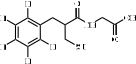
CAS:Controlled ProductFormula:C21H22BrNO5S·C12H23NColor and Shape:NeatMolecular weight:661.69


![2-[(2-benzyl-3-sulfanylpropanoyl)amino]acetic acid](/_next/image/?url=https%3A%2Fstatic.cymitquimica.com%2Fproducts%2FIN%2Fthumb%2FDA0035P3.jpg&w=3840&q=75)








![S-[2-(2-Bromo-3-methoxyphenyl)-2-oxoethyl] Thiorphan Dicyclohexylamine Salt](/_next/image/?url=https%3A%2Fstatic.cymitquimica.com%2Fproducts%2FTR%2Fthumb%2FB683875.jpg&w=3840&q=75)