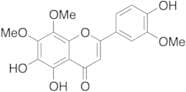
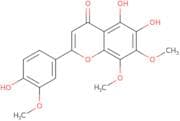
CAS 76844-67-2
:Mucroflavone B
Description:
Mucroflavone B, with the CAS number 76844-67-2, is a naturally occurring flavonoid compound that is part of a larger class of polyphenolic compounds known for their diverse biological activities. Flavonoids, including Mucroflavone B, are characterized by their phenolic structure, which typically consists of two aromatic rings connected by a three-carbon bridge. This compound is often studied for its potential antioxidant properties, which can help mitigate oxidative stress in biological systems. Additionally, Mucroflavone B may exhibit anti-inflammatory and antimicrobial activities, making it of interest in pharmacological research. Its solubility and stability can vary depending on environmental conditions, such as pH and temperature. As with many flavonoids, Mucroflavone B may also interact with various biological targets, influencing cellular signaling pathways. Research into its specific mechanisms of action and potential therapeutic applications is ongoing, highlighting the importance of flavonoids in health and disease management.
Formula:C18H16O8
InChI:InChI=1/C18H16O8/c1-23-12-6-8(4-5-9(12)19)11-7-10(20)13-14(21)15(22)17(24-2)18(25-3)16(13)26-11/h4-7,19,21-22H,1-3H3
InChI key:InChIKey=BAIRXMVFPKLWSE-UHFFFAOYSA-N
SMILES:O(C)C1=C2C(=C(O)C(O)=C1OC)C(=O)C=C(O2)C3=CC(OC)=C(O)C=C3
Synonyms:- Thymonin
- 5,6-Dihydroxy-2-(4-hydroxy-3-methoxyphenyl)-7,8-dimethoxy-4H-1-benzopyran-4-one
- Majoranin
- 5,6,4′-Trihydroxy-7,8,3′-trimethoxyflavone
- 4H-1-Benzopyran-4-one, 5,6-dihydroxy-2-(4-hydroxy-3-methoxyphenyl)-7,8-dimethoxy-
- See more synonyms
Sort by
Purity (%)
0
100
|
0
|
50
|
90
|
95
|
100
Found 2 products.
Thymonin
CAS:Thymonin is an analog of the thyroid hormone that has been shown to have anticancer properties. It works by inhibiting kinases, which are enzymes that play a crucial role in cancer cell growth and proliferation. Thymonin induces apoptosis, or programmed cell death, in cancer cells, making it an effective treatment option for various types of tumors. This protein-based substance is derived from Chinese urine and has been extensively studied for its potential as an inhibitor of human kinases. Thymonin has shown promising results in preclinical studies as a potential therapeutic agent for cancer treatment. Its ability to selectively target cancer cells while leaving healthy cells unharmed makes it a promising candidate for future cancer therapies.Formula:C18H16O8Purity:Min. 95%Molecular weight:360.3 g/mol