CymitQuimica logo

CAS 77356-14-0

:

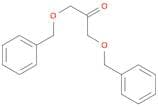
2-Propanone, 1,3-bis(phenylmethoxy)-

Description:
2-Propanone, 1,3-bis(phenylmethoxy)-, also known as bis(phenylmethoxy)acetone, is an organic compound characterized by its ketone functional group and two phenylmethoxy substituents. It typically appears as a colorless to pale yellow liquid with a distinctive sweet odor. This compound is soluble in organic solvents such as ethanol and ether but has limited solubility in water due to its hydrophobic phenyl groups. Its molecular structure contributes to its reactivity, particularly in nucleophilic substitution reactions, where the ketone can act as an electrophile. The presence of the phenylmethoxy groups enhances its stability and can influence its physical properties, such as boiling point and viscosity. 2-Propanone, 1,3-bis(phenylmethoxy)- is often utilized in organic synthesis and may serve as an intermediate in the production of various chemical compounds. Safety precautions should be observed when handling this substance, as it may pose health risks if inhaled or ingested.
Formula:C17H18O3
Sort by

Purity (%)
0
100
|
0
|
50
|
90
|
95
|
100
Found 3 products.
  • 1,3-Bis(benzyloxy)propan-2-one

    CAS:
    Formula:C17H18O3
    Purity:95%
    Color and Shape:Solid
    Molecular weight:270.3230

    Ref: IN-DA005N2C

    1g
    229.00€
    5g
    596.00€
    100mg
    116.00€
    250mg
    163.00€
  • 1,3-Bis(benzyloxy)propan-2-one

    CAS:
    Formula:C17H18O3
    Purity:95.0%
    Color and Shape:Liquid, No data available.
    Molecular weight:270.328

    Ref: 10-F544730

    1g
    305.00€
    5g
    828.00€
    250mg
    To inquire
  • 1,3-Bis(benzyloxy)propan-2-one

    CAS:
    <p>1,3-Bis(benzyloxy)propan-2-one is an efficient and stereoselective synthesis of epoxides. It is a chiral molecule that can be used in the synthesis of enantiomers. The reaction involves a nucleophile (such as an alcohol) and an electrophile (an epoxide). This reaction proceeds in two steps with the nucleophile attacking at the carbon atom adjacent to the carbonyl group. The first step is a nucleophilic addition to form a tetrahedral intermediate which collapses to give an intermediate with two new stereogenic centers. The second step is then a nucleophilic attack by water on one of these new stereogenic centers, leading to formation of the product and release of hydrogen gas. 1,3-Bis(benzyloxy)propan-2-one has been shown to be more efficient than other methods for synthesizing epoxides, such as using acid chlorides or ox</p>
    Formula:C17H18O3
    Purity:Min. 95%
    Molecular weight:270.32 g/mol

    Ref: 3D-CDA35614

    2500mg
    547.00€