CAS 7737-16-8
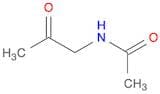
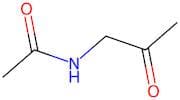
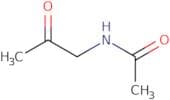
:N-(2-Oxopropyl)acetamide
Description:
N-(2-Oxopropyl)acetamide, with the CAS number 7737-16-8, is an organic compound characterized by its amide functional group. It features a propanoyl moiety attached to an acetamide structure, which contributes to its chemical reactivity and potential applications. This compound is typically a colorless to pale yellow liquid or solid, depending on its purity and specific conditions. It is soluble in polar solvents, such as water and alcohols, due to the presence of the amide group, which can engage in hydrogen bonding. N-(2-Oxopropyl)acetamide may exhibit biological activity, making it of interest in pharmaceutical research. Its stability under standard conditions allows for various synthetic applications, particularly in organic synthesis and as an intermediate in the production of other chemical compounds. Safety data should be consulted for handling and storage, as with any chemical substance, to ensure proper precautions are taken. Overall, N-(2-Oxopropyl)acetamide is a versatile compound with potential utility in both industrial and research settings.
Formula:C5H9NO2
InChI:InChI=1S/C5H9NO2/c1-4(7)3-6-5(2)8/h3H2,1-2H3,(H,6,8)
InChI key:InChIKey=SICIPBMLFSQZEQ-UHFFFAOYSA-N
SMILES:C(NC(C)=O)C(C)=O
Synonyms:- (Acetylamino)acetone
- 1-(Acetylamino)-2-propanone
- Acetamide, N-(2-oxopropyl)-
- Acetamide, N-acetonyl-
- Acetamidoacetone
- Ai3-62736
- N-Acetonylacetamide
- N-(2-Oxopropyl)acetamide
Sort by
Purity (%)
0
100
|
0
|
50
|
90
|
95
|
100
Found 4 products.
1-Acetamido-acetone
CAS:Acetamido-acetone is a chloromethyl ketone that reacts with water to form hydrochloric acid and acetone. It is used as a hydration agent in the synthesis of polyesters, such as polyethylene terephthalate (PET). Acetamido-acetone is also used for the synthesis of a variety of organic compounds and plastics. Acetamido-acetone can be used as a polymerization initiator or an intermediate in the production of other chemicals. Acetamido-acetone has low toxicity and does not react with most materials. However, it should not be mixed with strong acids or bases because this may cause hazardous fumes to form. Acetamido-acetone reacts with deuterium isotopes to produce light emission, which can be used for chemical research.
br>Formula:C5H9NO2Purity:Min. 95%Molecular weight:115.13 g/mol