CAS 77409-99-5
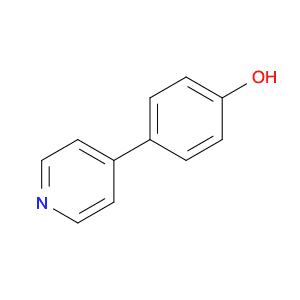
:Phenol, 4-(4-pyridinyl)-
Description:
Phenol, 4-(4-pyridinyl)-, also known as 4-(4-pyridyl)phenol, is an organic compound characterized by the presence of both a phenolic hydroxyl group and a pyridine ring. This compound typically appears as a solid at room temperature and is soluble in organic solvents, reflecting its aromatic nature. The presence of the pyridine moiety contributes to its basicity and potential for forming hydrogen bonds, which can influence its reactivity and interactions with other molecules. It is often studied for its biological activity, including potential applications in pharmaceuticals and as a ligand in coordination chemistry. The compound may exhibit antioxidant properties and can participate in various chemical reactions, such as electrophilic substitutions. Safety data indicates that, like many phenolic compounds, it may be harmful if ingested or inhaled, necessitating appropriate handling precautions in laboratory settings. Overall, 4-(4-pyridinyl)phenol is a versatile compound with significant implications in both synthetic and medicinal chemistry.
Formula:C11H9NO
Sort by
Purity (%)
0
100
|
0
|
50
|
90
|
95
|
100
Found 4 products.
4-(Pyridin-4-yl)phenol
CAS:4-Pyridin-4-ylphenol is a redox active compound that can undergo one-electron reduction. It has been shown to be an excellent electron donor and acceptor in the electrochemical studies. 4-(Pyridin-4-yl)phenol also has a biradical structure, which is responsible for its unpaired electrons and unpaired spectra. This compound can be used as an initiator of free radical reactions due to its high redox potentials. The electron transfer properties of this ligand have been studied using electrochemical techniques and it was found to be capable of initiating oxidation or reduction of other compounds.Formula:C11H9NOPurity:Min. 95%Molecular weight:171.2 g/mol