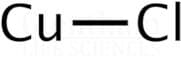
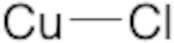
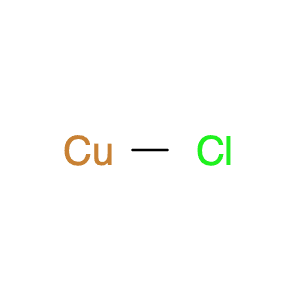
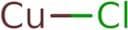
CAS 7758-89-6
:Cuprous chloride
- Chlorocopper
- Chlorure de cuivre
- Cloruro De Cobre
- Copper Chloride
- Copper chloride (Cu2Cl2)
- Copper chloride (Cu<sub>2</sub>Cl<sub>2</sub>)
- Copper chloride (CuCl)
- Copper monochloride
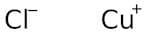
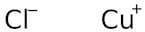
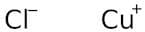
- Copper(1+) chloride
- Copper(I) chloride solution
- Copperchlorideanhydrous
- Copperchloridelightgraypowder
- Cuprous chloride
- Cuprous chloride (Cu2Cl2)
- Cuprous chloride (Cu<sub>2</sub>Cl<sub>2</sub>)
- Cuprous chloride (CuCl)
- Dicopper dichloride
- Kupfer(I)-Chlorid
- Kupferchlorid
- Copper(I) chloride
- COPPER(I)CHLORIDE
- dicopperdichloride
- Cuproid
- chloridmedny
- cuprouschloride(cu2cl2)
- copperchloride(cucl)
- cuprousdichloride
- COPPER (I) CHLORIDE ACID
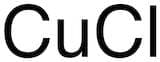
- CuCl
- coppermonochloride
- Cu-lyt
- See more synonyms
Copper(I) Chloride
CAS:Formula:CuClPurity:>98.0%Color and Shape:White to Gray powder to crystalMolecular weight:99.00Copper(I) chloride, 97%
CAS:It is precursor to many copper compounds including copper oxychloride and many organocuprate compounds of synthetic interest. It is used as a catalyst as well as a reagent in many organic reactions including Gatterman-Koch, Sandmeyer, Grignard and Gilman reactions. It catalyzes 1,4-addition of GriFormula:ClCuPurity:97%Molecular weight:99.00Copper(I) chloride, 99% (metals basis)
CAS:Copper(I) chloride is precursor to many copper compounds including copper oxychloride and many organocuprate compounds of synthetic interest. It is used as a catalyst as well as a reagent in many organic reactions including Gatterman-Koch, Sandmeyer, Grignard and Gilman reactions. It catalyzes 1,4Formula:ClCuPurity:99%Molecular weight:99.00Copper(I) chloride, 99.999% (metals basis)
CAS:Copper(I) chloride is precursor to many copper compounds including copper oxychloride and many organocuprate compounds of synthetic interest. It is used as a catalyst as well as a reagent in many organic reactions including Gatterman-Koch, Sandmeyer, Grignard and Gilman reactions. It catalyzes 1,Formula:ClCuPurity:99.999%Molecular weight:99.00Copper(I) chloride (99.99%-Cu) PURATREM
CAS:Copper(I) chloride (99.99%-Cu) PURATREM
Formula:CuClPurity:(99.99%-Cu)Color and Shape:light-gray to pale green solidMolecular weight:98.99Copper(I) chloride
CAS:Copper(I) chlorideFormula:·Cu·ClPurity:98.5%Color and Shape:Beige SolidMolecular weight:98.999g/molCopper(I) chloride, anhydrous, 97+%
CAS:Copper(I) chloride, anhydrous, 97+%
Formula:CuClPurity:97+%Color and Shape:light brown pwdr.Molecular weight:98.99Copper(I) chloride
CAS:Formula:CuClPurity:≥ 98.0%Color and Shape:White to light-grey or beige crystals or crystalline powderMolecular weight:98.99Copper(I) chloride, anhydrous, 97+%
CAS:Formula:CuClPurity:≥ 97.0%Color and Shape:White to light-grey crystals or crystalline powderMolecular weight:99.00Copper(I) Chloride
CAS:Controlled ProductApplications Copper(I) Chloride, has many applications. The main use of copper(I) Chloride is as a precursor to the fungicide copper oxychloride. In organic synthesis, CuCl is used as an initiator of radical reactions such as the hydrostannation of α,β-unsaturated ketones.
Not a dangerous good if item is equal to or less than 1g/ml and there is less than 100g/ml in the package
References Wade, L. G., et al.: Org. Chem., 5th Ed., 871 (2003); Ooi, T., et al.: Tetrahedron Lett., 40, 2133 (1999);Formula:ClCuColor and Shape:NeatMolecular weight:99.0Copper (I) chloride
CAS:Copper (I) chloride is a chemical compound that is made up of copper and chlorine. It has an ideal pH of 5.8 and reacts with water to form cuprous chloride, which can be used in the production of nitric acid. Copper (I) chloride also forms insoluble complexes with fatty acids, amines, and nitrogen atoms. Copper (I) chloride has been shown to inhibit the growth of some bacteria, such as Staphylococcus aureus, by inhibiting protein synthesis. This inhibition may be due to the structural similarities between copper (I) chloride and copper (II) sulfate, which inhibits protein synthesis by binding to ribosomes. Copper (I) chloride has also been shown to cause autoimmune diseases in mice because it contains hydroxyl groups that are similar to those found on human thyroglobulin proteins. The resulting immune response leads to an inflammatory reaction that damages tissues in the body.br>br>
Formula:CuClColor and Shape:Yellow Clear LiquidMolecular weight:99 g/molRef: 3D-FC32568
Discontinued productCuprous Chloride pure, 97%
CAS:Formula:CuClPurity:min. 97%Color and Shape:White to green (May oxidize to green in air), Crystalline powderMolecular weight:99.00Cuprous Chloride ACS, 97%
CAS:Formula:CuClPurity:min. 97%Color and Shape:White to green (May oxidize to green in air), Crystalline powderMolecular weight:99.00