CAS 77726-78-4
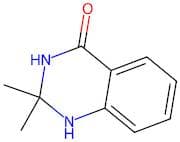
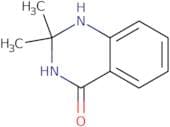
:4(1H)-Quinazolinone, 2,3-dihydro-2,2-dimethyl-
Description:
4(1H)-Quinazolinone, 2,3-dihydro-2,2-dimethyl- is a heterocyclic organic compound characterized by its quinazolinone structure, which consists of a fused benzene and pyrimidine ring. This compound typically exhibits a white to off-white crystalline appearance and is soluble in organic solvents. Its molecular structure includes a dimethyl group at the 2-position of the dihydroquinazolinone ring, which contributes to its unique chemical properties. The presence of the quinazolinone moiety often imparts biological activity, making such compounds of interest in medicinal chemistry for their potential therapeutic applications. Additionally, the compound may exhibit various functional properties, including potential anti-inflammatory, antimicrobial, or anticancer activities, depending on the specific substituents and structural modifications. As with many organic compounds, its stability, reactivity, and interactions with other substances can vary based on environmental conditions such as pH and temperature. Safety data should be consulted for handling and usage, as with any chemical substance.
Formula:C10H12N2O
Sort by
Purity (%)
0
100
|
0
|
50
|
90
|
95
|
100
Found 3 products.
2,2-Dimethyl-1,2,3-trihydroquinazolin-4-one
CAS:2,2-Dimethyl-1,2,3-trihydroquinazolin-4-onePurity:95%Molecular weight:176.22g/mol2,2-Dimethyl-1,2,3-trihydroquinazolin-4-one
CAS:Formula:C10H12N2OPurity:95.0%Color and Shape:SolidMolecular weight:176.2192,2-dimethyl-1,2,3-trihydroquinazolin-4-one
CAS:2,2-dimethyl-1,2,3-trihydroquinazolin-4-one is a natural product that belongs to the family of quinazolinones. It is found in a variety of microorganisms and plants. It has been isolated from the fungus Penicillium notatum, where it acts as an inhibitor of glycerol dehydratase. This compound also inhibits dereplication by inhibiting the synthesis of anthranilic acid. 2,2-dimethyl-1,2,3-trihydroquinazolin-4-one has been shown to inhibit the biosynthesis of anthranilamide and other bioactive natural products. It is a potent antibacterial agent against Gram positive bacteria such as Staphylococcus aureus and Bacillus subtilis.Purity:Min. 95%