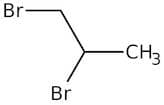
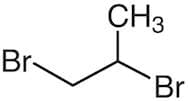
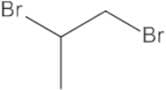
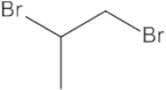
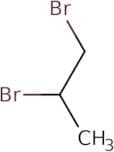
CAS 78-75-1
:1,2-Dibromopropane
- (2S)-1,2-dibromopropane
- 1,2-Dibromoproapne
- 1.2-Dibromoethane
- 2,3-Dibromopropane
- Propane, 1,2-dibromo-
- Propylene dibromide
- 1,2-Dibromopropane
1,2-Dibromopropane, 98%
CAS:1,2-Dibromopropane was used to study the effect of reductant concentration, reductant contact time and suspension pH on reductive dechlorination of carbon tetrachloride by soil manipulated with Fe(II) and HS-. It was used as internal standard during the determination of nitrogenous disinfection bypr
Formula:C3H6Br2Purity:98%Color and Shape:Clear colorless to pale yellow, LiquidMolecular weight:201.891,2-Dibromopropane
CAS:Formula:C3H6Br2Purity:>98.0%(GC)Color and Shape:Colorless to Light yellow to Light orange clear liquidMolecular weight:201.891,2-Dibromopropane
CAS:Controlled ProductFormula:C3H6Br2Color and Shape:Light Yellow LiquidMolecular weight:201.891,2-Dibromopropane 10000 µg/mL in Hexane
CAS:Formula:C3H6Br2Color and Shape:Single SolutionMolecular weight:201.891,2-Dibromopropane
CAS:1,2-Dibromopropane is a chemical that has been used as a solvent and refrigerant. It is also used to produce other chemicals such as ethylene oxide and 1,3-dichloropropane. 1,2-Dibromopropane can be metabolized by the liver or kidney into reactive intermediates that cause damage to DNA. This chemical has been shown to cause an antibody response in rats when orally administered at high doses. The mechanism of this chemical's toxicity is not known, but it may involve the formation of reactive intermediates with the release of glucuronide conjugate and kinetic energy.
Formula:C3H6Br2Purity:Min. 95%Molecular weight:201.89 g/mol