CAS 78432-77-6
:10-Deacetyltaxol
Description:
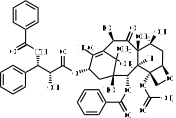
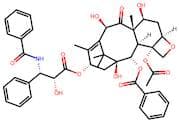
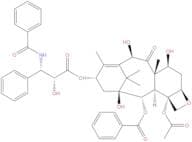
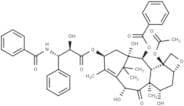
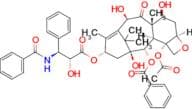
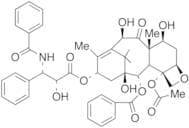
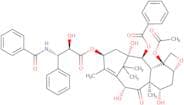
10-Deacetyltaxol, with the CAS number 78432-77-6, is a derivative of the natural product taxol, which is known for its anticancer properties. This compound is characterized by the absence of an acetyl group at the C10 position, which distinguishes it from taxol. It exhibits a complex polycyclic structure typical of taxanes, featuring a taxane core that contributes to its biological activity. 10-Deacetyltaxol is primarily recognized for its ability to stabilize microtubules, thereby inhibiting cell division, which is a crucial mechanism in cancer treatment. The compound is often studied for its potential therapeutic applications and may exhibit varying degrees of cytotoxicity against different cancer cell lines. Additionally, its solubility and stability in biological systems can influence its efficacy as a therapeutic agent. Overall, 10-Deacetyltaxol represents an important compound in the field of medicinal chemistry, particularly in the development of chemotherapeutic agents.
Formula:C45H49NO13
InChI:InChI=1S/C45H49NO13/c1-24-29(57-41(54)35(50)33(26-15-9-6-10-16-26)46-39(52)27-17-11-7-12-18-27)22-45(55)38(58-40(53)28-19-13-8-14-20-28)36-43(5,37(51)34(49)32(24)42(45,3)4)30(48)21-31-44(36,23-56-31)59-25(2)47/h6-20,29-31,33-36,38,48-50,55H,21-23H2,1-5H3,(H,46,52)/t29-,30-,31+,33-,34+,35+,36-,38-,43+,44-,45+/m0/s1
InChI key:InChIKey=TYLVGQKNNUHXIP-MHHARFCSSA-N
SMILES:O(C(C)=O)[C@]12[C@]3([C@H](OC(=O)C4=CC=CC=C4)[C@@]5(O)C(C)(C)C([C@@H](O)C(=O)[C@]3(C)[C@@H](O)C[C@]1(OC2)[H])=C(C)[C@@H](OC([C@@H]([C@@H](NC(=O)C6=CC=CC=C6)C7=CC=CC=C7)O)=O)C5)[H]
Synonyms:- (2alpha,5beta,7beta,10beta,13alpha)-4-(acetyloxy)-13-{[(2R,3S)-3-(benzoylamino)-2-hydroxy-3-phenylpropanoyl]oxy}-1,7,10-trihydroxy-9-oxo-5,20-epoxytax-11-en-2-yl benzoate
- 10-Deacetylpaclitaxel
- 10-Deacetyltaxol
- 10-Deacetyltaxol A
- 10-Desacetylpaclitaxel
- 10-Desacetyltaxol
- 10-O-Deacetyltaxol
- 7,11-Methano-1H-cyclodeca[3,4]benz[1,2-b]oxete, benzenepropanoic acid deriv.
- 7-Epi-10-deacetyl paclitaxel
- Benzenepropanoic acid, β-(benzoylamino)-α-hydroxy-, (2aR,4S,4aS,6R,9S,11S,12S,12aR,12bS)-12b-(acetyloxy)-12-(benzoyloxy)-2a,3,4,4a,5,6,9,10,11,12,12a,12b-dodecahydro-4,6,11-trihydroxy-4a,8,13,13-tetramethyl-5-oxo-7,11-methano-1H-cyclodeca[3,4]benz[1,2-b]oxet-9-yl ester, (αR,βS)-
- Benzenepropanoic acid, β-(benzoylamino)-α-hydroxy-, 12b-(acetyloxy)-12-(benzoyloxy)-2a,3,4,4a,5,6,9,10,11,12,12a,12b-dodecahydro-4,6,11-trihydroxy-4a,8,13,13-tetramethyl-5-oxo-7,11-methano-1H-cyclodeca[3,4]benz[1,2-b]oxet-9-yl ester, [2aR-[2aα,4β,4aβ,6β,9α(αR*,βS*),11α,12α,12aα,12bα]]-
- See more synonyms
Sort by
Purity (%)
0
100
|
0
|
50
|
90
|
95
|
100
Found 9 products.
Paclitaxel EP Impurity G (10-Desacetyl Paclitaxel)
CAS:Formula:C45H49NO13Color and Shape:Pink SolidMolecular weight:811.8810-Deacetyltaxol
CAS:Formula:C45H49NO13Purity:≥ 98.0%Color and Shape:White to off-white powderMolecular weight:811.8810-Deacetyltaxol
CAS:10-Deacetyltaxol and cephalomannine have cytotoxicity in human glial and neuroblastoma cell-lines, the tumors of the central and peripheral nervous system are sensitive to 10-deacetyltaxol and cephalomannine and these drugs are less toxic than taxol but remain within a therapeutic range.Formula:C45H49NO13Purity:95%~99%Molecular weight:811.88110-Deacetyltaxol
CAS:10-Deacetyltaxol (10-DAT) is extracted from Taxus brevifolia barks.Formula:C45H49NO13Purity:94.63% - 99.93%Color and Shape:SolidMolecular weight:811.8710-Desacetyl Paclitaxel
CAS:Impurity Paclitaxel - impurity G
Applications A semi-synthetic precursor of Paclitaxel. Paclitaxel - impurity G.Formula:C45H49NO13Color and Shape:White To Off-WhiteMolecular weight:811.8710-Desacetyl paclitaxel
CAS:10-Desacetyl paclitaxel is a form of paclitaxel that has been modified chemically. It is soluble in water and can be injected intravenously. 10-Desacetyl paclitaxel is used to treat inflammatory diseases, such as rheumatoid arthritis and psoriasis. This drug binds to the hydroxyl groups on the surface of the bacterial cell wall and prevents the formation of covalent linkages with polysaccharides, which leads to its increased patency in bacterial cells. 10-Desacetyl paclitaxel has also been shown to inhibit the activity of certain enzymes that are involved in synthesis of DNA, RNA, and proteins. This inhibition results in cell death by apoptosis or necrosis. The increase in viability after treatment with 10-desacetyl paclitaxel was observed for both gram-positive bacteria (e.g., Bacillus subtilis) and gram-negative bacteria (e.g., EscherFormula:C45H49NO13Purity:Min. 95%Color and Shape:White PowderMolecular weight:811.87 g/mol