

![Phenol, 4-[(methylamino)methyl]-](/_next/image/?url=https%3A%2Fstatic.cymitquimica.com%2Fcas-image%2Fthumb-webp%2F227093-phenol-4-methylamino-methyl.webp&w=3840&q=75)
CAS 78507-19-4
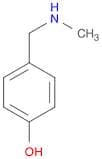
:Phenol, 4-[(methylamino)methyl]-
Description:
Phenol, 4-[(methylamino)methyl]- is an organic compound characterized by the presence of a phenolic group and a methylamino side chain. It features a hydroxyl group (-OH) attached to a benzene ring, which contributes to its acidic properties and ability to engage in hydrogen bonding. The methylamino group (-NH(CH3)2) enhances its solubility in polar solvents and may influence its reactivity and biological activity. This compound is typically a colorless to pale yellow liquid or solid, depending on its purity and temperature. It exhibits moderate toxicity and can act as a skin irritant. In terms of applications, it may be utilized in the synthesis of pharmaceuticals, agrochemicals, or as an intermediate in organic synthesis. Its chemical behavior is influenced by both the phenolic and amine functionalities, allowing it to participate in various chemical reactions, including electrophilic aromatic substitution and nucleophilic reactions. Safety precautions should be observed when handling this compound due to its potential health hazards.
Formula:C8H11NO
Synonyms:- 4-[(Methylamino)methyl]-phenol
Sort by
Purity (%)
0
100
|
0
|
50
|
90
|
95
|
100
Found 4 products.
4-((Methylamino)methyl)phenol
CAS:Formula:C8H11NOPurity:97%Color and Shape:SolidMolecular weight:137.17904-[(Methylamino)methyl]phenol
CAS:4-[(Methylamino)methyl]phenolPurity:98%Molecular weight:137.17904g/mol4-(Methylamino)methylphenol
CAS:Formula:C8H11NOPurity:97%Color and Shape:LiquidMolecular weight:137.1824-[(Methylamino)methyl]phenol
CAS:4-[(Methylamino)methyl]phenol is a metabolite of 4-aminobiphenyl, which is found in cigarette smoke and other combustion products. It is an end product of the oxidative metabolism of polycyclic aromatic hydrocarbons (PAHs). This chemical has been shown to cause cancer tissue damage in lung cells and metabolic disorders in mice. The thermal expansion coefficient of 4-[(methylamino)methyl]phenol has been measured on calf thymus DNA and found to be similar to that of water. Chronic exposure to this chemical causes an increase in body mass index, increased risk for cardiovascular disease, and increased risk for atherosclerosis. Studies have shown that 4-[(methylamino)methyl]phenol can be eliminated from the body with a half-life of about 8 hours. Logistic regression analysis showed that high-sensitivity C-reactive protein (hsCRP) levels are significantly higher in people who areFormula:C8H11NOPurity:Min. 95%Molecular weight:137.18 g/mol

![4-[(Methylamino)methyl]phenol](/_next/image/?url=https%3A%2Fstatic.cymitquimica.com%2Fproducts%2F54%2Fthumb%2FOR927144.jpg&w=3840&q=75)


![4-[(Methylamino)methyl]phenol](/_next/image/?url=https%3A%2Fstatic.cymitquimica.com%2Fproducts%2F3D%2Fthumb%2FDDA50719.jpg&w=3840&q=75)
