CAS 78593-33-6
:3-Bromocinnoline
Description:
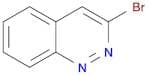
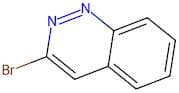
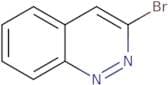
3-Bromocinnoline is a heterocyclic organic compound characterized by its fused ring structure, which includes a bromine atom attached to the cinnoline moiety. The compound features a bicyclic structure composed of a pyridine and a pyrazole ring, contributing to its unique chemical properties. It is typically a yellow to brown solid at room temperature and is sparingly soluble in water but more soluble in organic solvents such as ethanol and dichloromethane. The presence of the bromine atom enhances its reactivity, making it a useful intermediate in various organic synthesis reactions, including those involving electrophilic substitutions. 3-Bromocinnoline can also exhibit biological activity, which has drawn interest in medicinal chemistry for potential applications in drug development. Its molecular structure allows for various functionalization possibilities, making it a versatile compound in research and industrial applications. Safety precautions should be taken when handling this substance, as with many brominated compounds, due to potential toxicity and environmental concerns.
Formula:C8H5BrN2
InChI:InChI=1/C8H5BrN2/c9-8-5-6-3-1-2-4-7(6)10-11-8/h1-5H
SMILES:c1ccc2c(c1)cc(Br)nn2
Synonyms:- Cinnoline, 3-Bromo-
Sort by
Purity (%)
0
100
|
0
|
50
|
90
|
95
|
100
Found 4 products.
3-Bromocinnoline
CAS:3-Bromocinnoline is a heterobicyclic, primary amino acid with a carbonyl group. It has been shown to activate cancer cells and may be useful in the treatment of brain infarction. 3-Bromocinnoline has been shown to inhibit the activity of tyrosine kinase, which is involved in many cellular processes including cell growth, differentiation, and proliferation. The stereoisomers of 3-bromocinnoline have been shown to have different effects on protein kinase activity.
Formula:C8H5BrN2Purity:Min. 95%Molecular weight:209.05 g/mol