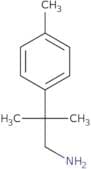
CAS 786602-39-9
:Benzeneethanamine, b,b,4-trimethyl-
Description:
Benzeneethanamine, b,b,4-trimethyl- is an organic compound characterized by its amine functional group and a benzene ring structure. It features a two-carbon ethyl chain attached to a benzene ring, with three methyl groups located at the 4-position of the benzene ring, contributing to its branched structure. This compound is likely to exhibit properties typical of aromatic amines, such as moderate solubility in organic solvents and potential reactivity due to the presence of the amine group. The presence of multiple methyl groups can influence its steric hindrance and electronic properties, potentially affecting its reactivity and interactions with other chemical species. Additionally, due to its structure, it may have applications in various fields, including pharmaceuticals, agrochemicals, or as an intermediate in organic synthesis. Safety and handling considerations are important, as aromatic amines can pose health risks, including potential carcinogenicity. As with any chemical, proper safety protocols should be followed when handling this substance.
Formula:C11H17N
Synonyms:- Benzeneethanamine, -bta-,-bta-,4-trimethyl-
Sort by
Purity (%)
0
100
|
0
|
50
|
90
|
95
|
100
Found 1 products.
2-Methyl-2-p-tolyl-propylamine
CAS:2-Methyl-2-p-tolyl-propylamine (MPTP) is an aromatic compound that has been shown to have some biologic activity. MPTP was first synthesized in the lab of Dr. K.B. Sharpless and his team at Duke University in 1979, who were attempting to make an inhibitor for monoamine oxidase B (MAO-B). MAO-B is a type of enzyme that breaks down the neurotransmitter dopamine, which is involved in the regulation of movement and emotions. The synthesis of MPTP was abandoned when it was found that the compound was instead metabolized into a neurotoxin called 1-methyl-4-phenylpyridinium (MPP+), which caused Parkinson's disease in mice. MPTP causes cell death by inhibiting mitochondrial complex I, which produces adenosine triphosphate (ATP) needed for cell function, leading to cell death through apoptosis or necrosisFormula:C11H17NPurity:Min. 95%Molecular weight:163.26 g/mol