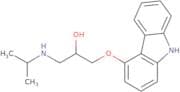
![2-Propanol,1-(9H-carbazol-4-yloxy)-3-[(1-methylethyl)amino]-, (2S)-](/_next/image/?url=https%3A%2Fstatic.cymitquimica.com%2Fcas-image%2Fthumb-webp%2F40626-2-propanol-1-9h-carbazol-4-yloxy-3-1-methylethyl-amino-2s.webp&w=3840&q=75)
CAS 78859-33-3
:2-Propanol,1-(9H-carbazol-4-yloxy)-3-[(1-methylethyl)amino]-, (2S)-
Description:
2-Propanol, 1-(9H-carbazol-4-yloxy)-3-[(1-methylethyl)amino]-, (2S)-, with CAS number 78859-33-3, is a chemical compound characterized by its complex structure that includes a carbazole moiety, which is known for its aromatic properties and potential applications in organic electronics and photonics. The presence of the isopropanol group suggests that it has alcohol functionalities, which can contribute to its solubility in polar solvents and its reactivity in various chemical processes. The (2S)- configuration indicates that it has a specific stereochemistry, which may influence its biological activity and interactions with other molecules. This compound may exhibit properties typical of both alcohols and amines, such as hydrogen bonding capabilities, which can affect its physical and chemical behavior. Its unique structure may also impart specific pharmacological properties, making it of interest in medicinal chemistry and drug development. Overall, this compound's characteristics are defined by its functional groups, stereochemistry, and the presence of the carbazole unit, which collectively influence its reactivity and potential applications.
Formula:C18H22N2O2
Synonyms:- 2-Propanol,1-(9H-carbazol-4-yloxy)-3-[(1-methylethyl)amino]-, (S)-
- (-)-Carazolol
- (-)-S-Carazolol
- (S)-Corazolol
Sort by
Purity (%)
0
100
|
0
|
50
|
90
|
95
|
100
Found 2 products.
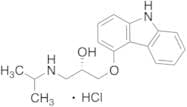
(S)-Carazolol Hydrochloride
CAS:Controlled ProductFormula:C18H22N2O2Color and Shape:NeatMolecular weight:298.38(S)-Carazolol hydrochloride
CAS:(S)-Carazolol hydrochloride is a protein analog that has been shown to inhibit kinases. It is a potent inhibitor of the kinase activity of cannabidiol, which has been implicated in the development and progression of cancer. (S)-Carazolol hydrochloride has demonstrated anticancer properties in human cancer cell lines, inducing apoptosis and inhibiting tumor growth. This compound has also been studied as a potential inhibitor of Chinese hamster ovary (CHO) cell growth. In addition, (S)-Carazolol hydrochloride has been explored as a potential therapy for other diseases associated with kinase activity, such as Alzheimer's disease and Parkinson's disease.Formula:C18H22N2O2Purity:Min. 95%Molecular weight:298.4 g/mol