CAS 79415-41-1
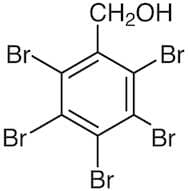
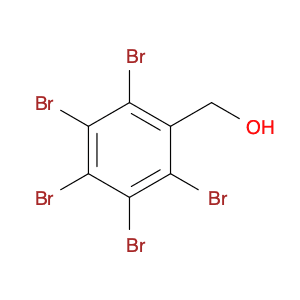
:(pentabromophenyl)methanol
Description:
(Pentabromophenyl)methanol, with the CAS number 79415-41-1, is a brominated organic compound characterized by the presence of a pentabromophenyl group attached to a methanol moiety. This compound is notable for its high bromine content, which imparts significant flame-retardant properties, making it useful in various applications, particularly in the plastics and textiles industries. The presence of multiple bromine atoms enhances its stability and resistance to degradation, but it also raises concerns regarding environmental persistence and potential toxicity. The compound is typically solid at room temperature and may exhibit low solubility in water, while being more soluble in organic solvents. Its chemical structure suggests potential reactivity, particularly in nucleophilic substitution reactions, due to the presence of the hydroxyl (-OH) group. Overall, (pentabromophenyl)methanol is an important compound in materials science, but its environmental impact and safety profile warrant careful consideration in its use and disposal.
Formula:C7H3Br5O
InChI:InChI=1/C7H3Br5O/c8-3-2(1-13)4(9)6(11)7(12)5(3)10/h13H,1H2
SMILES:C(c1c(c(c(c(c1Br)Br)Br)Br)Br)O
Synonyms:- Benzenemethanol, 2,3,4,5,6-Pentabromo-
- 2,3,4,5,6-Pentabromobenzyl Alcohol
- 2,3,4,5,6-pentabromo-Benzenemethanol
Sort by
Purity (%)
0
100
|
0
|
50
|
90
|
95
|
100
Found 5 products.
Pentabromobenzyl Alcohol
CAS:Formula:C7H3Br5OPurity:>98.0%(GC)Color and Shape:White to Light yellow powder to crystalMolecular weight:502.622,3,4,5,6-Pentabromobenzyl Alcohol
CAS:Formula:C7H3Br5OPurity:95%Color and Shape:SolidMolecular weight:502.61812,3,4,5,6-Pentabromobenzylalcohol
CAS:2,3,4,5,6-PentabromobenzylalcoholPurity:98%Molecular weight:502.62g/mol2,3,4,5,6-Pentabromobenzylalcohol
CAS:2,3,4,5,6-Pentabromobenzylalcohol is a synthetic monomer. It has been used in the production of polymers such as plastics and elastomers. 2,3,4,5,6-Pentabromobenzylalcohol is converted to an enolate by reaction with sodium or potassium carbonate or hydroxide. This conversion can be performed in the presence of acetone or ethylene glycol to form a multilayer polymer. The reaction also produces acrylate and chlorine gas as byproducts. 2,3,4,5,6-Pentabromobenzylalcohol can also be reacted with alkoxides and alkali metal alcohols to produce primary alcohols.Formula:C7H3Br5OPurity:Min. 95%Molecular weight:502.62 g/mol