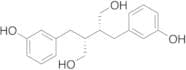
CAS 80226-00-2
:Enterodiol
Description:
Enterodiol is a naturally occurring compound classified as a lignan, which is a type of polyphenolic compound found in various plants, particularly in seeds, whole grains, and vegetables. It is known for its potential health benefits, including antioxidant properties and possible roles in hormone regulation, particularly in relation to estrogen metabolism. Enterodiol is produced in the human body through the metabolism of dietary lignans, such as those found in flaxseeds. Its chemical structure features a dibenzylbutyrolactone skeleton, which contributes to its biological activity. Research has suggested that enterodiol may have implications in cancer prevention and cardiovascular health, although further studies are needed to fully understand its mechanisms and efficacy. Additionally, enterodiol is of interest in the field of nutraceuticals and functional foods due to its potential health-promoting properties. As with many phytochemicals, the bioavailability and effects of enterodiol can vary based on individual dietary habits and gut microbiota composition.
Formula:C18H22O4
InChI:InChI=1S/C18H22O4/c19-11-15(7-13-3-1-5-17(21)9-13)16(12-20)8-14-4-2-6-18(22)10-14/h1-6,9-10,15-16,19-22H,7-8,11-12H2/t15-,16-/m0/s1
InChI key:InChIKey=DWONJCNDULPHLV-HOTGVXAUSA-N
SMILES:[C@H]([C@@H](CC1=CC(O)=CC=C1)CO)(CC2=CC(O)=CC=C2)CO
Synonyms:- (2R,3R)-2,3-Bis[(3-hydroxyphenyl)methyl]-1,4-butanediol
- (2R,3R)-2,3-bis(3-hydroxybenzyl)butane-1,4-diol
- 1,4-Butanediol, 2,3-bis((3-hydroxyphenyl)methyl)-, (2R,3R)-
- 1,4-Butanediol, 2,3-bis((3-hydroxyphenyl)methyl)-, (R-(R*,R*))-
- 2,3-Bis(3-Hydroxybenzyl)Butane-1,4-Diol
- Ccris 8460
- (-)-Enterodiol
- (-)-Enterodiol
- Enterodiol
Sort by
Purity (%)
0
100
|
0
|
50
|
90
|
95
|
100
Found 2 products.
Enterodiol
CAS:Enterodiol is a phytoestrogenic compound, specifically classified as a plant-derived lignan metabolite, which originates from the consumption and subsequent gut microbial transformation of lignans found in dietary fiber-rich foods such as flaxseeds, whole grains, and certain vegetables. The mode of action involves its conversion by intestinal microbiota into enterodiol from precursors such as secoisolariciresinol diglucoside. Once absorbed, enterodiol can interact with estrogen receptors, exhibiting weak estrogenic activity, which contributes to its role as a selective estrogen receptor modulator.Formula:C18H22O4Purity:Min. 95%Color and Shape:White PowderMolecular weight:302.36 g/mol